



Watching the opening ceremonies of the 2026 Milan Olympics inspired me to recall my excursion to the Greek-speaking villages of Southern Italy. Known as Grecia Salentina (or Salentine Greece), the region includes nine villages: Calimera, Castrignano dei Greci, Corigliano d’Otranto, Martano, Martignano, Melpignano, Soleto, Sternatia, and Zollino. The Griko people are an ethnic Greek community in Southern Italy and are the descendants of ancient Greek and Byzantine populations. They speak Griko, a language that can still be understood by Greek speakers today.
We visited the village of Calimera with our guides, Dimitrios Mitsopoulos, who has an Italian university education, and Konstandina Savvopoulou of Tsioros Travel Agency. The name Calimera means “Good Morning” in Greek. The village’s language, folklore, and traditions show influences dating from the 8th century B.C. through the Byzantine Eastern Roman period. We visited the local park to see an ancient Attic Greek burial stone, which was donated by the city of Athens to Calimera in 1957.
At the top of the monument is the inscription “Zeni su en ise ettù sti Kalimera” (in Greek script: Τσένη ’σού ’εν είσαι ετού στη Καλημέρα). In English, it means, “You are not a stranger here in Calimera.”This inscription highlights the close relationship and shared origins between Calimera and Greek civilization.1 Seeing the people of Calimera preserve their heritage as Italian Greeks and proudly call themselves “the sons of Greece” was deeply inspiring.
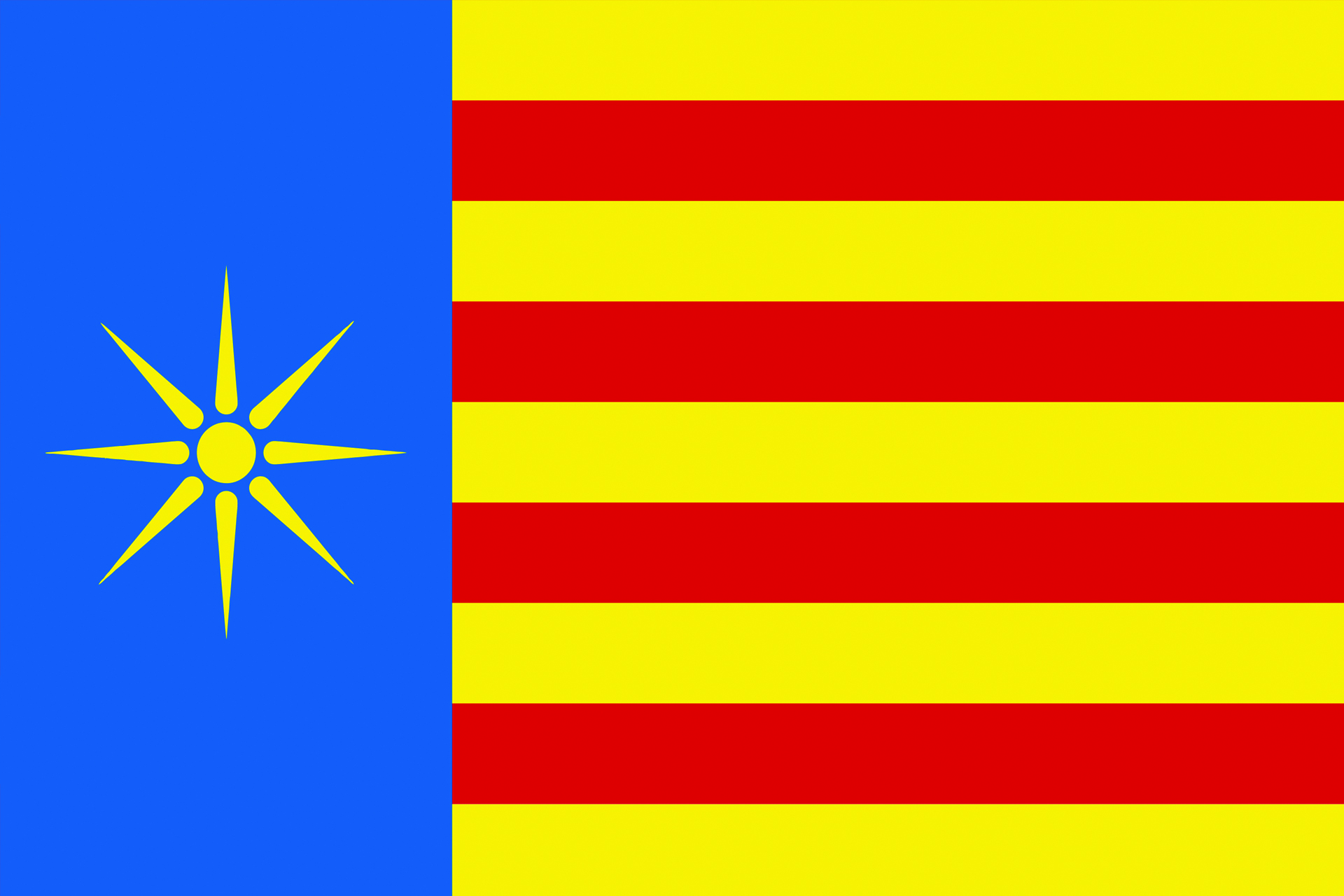
The flag of Lecce, the province where the Griko towns are located, features the Star of Vergina, a symbol of clear Greek origin that appears on many ancient coins found in the area. The Star of Vergina is an ancient Macedonian Greek symbol closely associated with Alexander the Great.2
The symbol was adopted by the Province of Lecce in the administrative region of Apulia (Puglia) in 1966, when an association founded by the Griko population was established. The goal of this union was to promote knowledge of the Griko language and to preserve Griko culture by supporting university research, teaching the language in schools, and publishing books and poetry in this endangered dialect.3
Globalization, erasing communities’ history does not exist in this area that is experiencing a Tourism boom. Special appreciation to owners Kosta Tsioros and Maria Papalou who arranged this Tsioros Agency tour, through the Greek viewpoint.
References:
1. https://viaggiart.com/en/Cal
2. https://commons.wikimedia.org/
3. https://en.wikipedia.org/wiki/
4. https://commons.wikimedia.org/

 Please wait...