

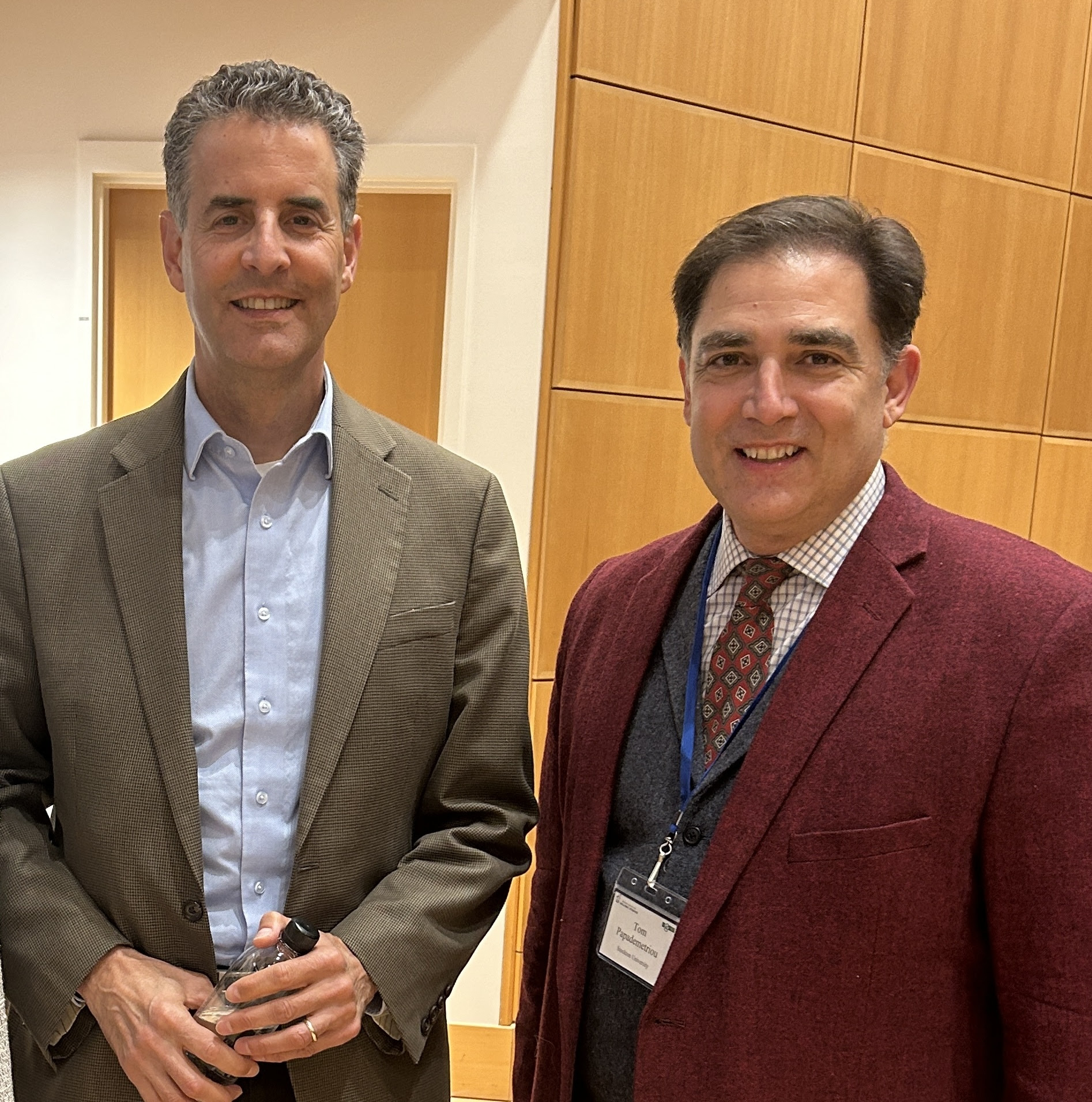

Professor Tom Papademetriou, Director of the Dean C. and Zoë S. Pappas Interdisciplinary Center for Hellenic Studies, played a pivotal role as Co-Chair of the 28th Modern Greek Studies Association (MGSA) Symposium, held at Princeton University’s Friend Center for Engineering Education. Papademetriou, who served as MGSA President from 2019 to 2023, brought his expertise and leadership to the event, which became one of the largest and most significant gatherings in the association’s history.
The 28th MGSA Symposium, hosted at the Stanley J. Seeger Class of ’52 Center for Hellenic Studies, featured more than 160 presentations across 49 dynamic sessions, covering a broad spectrum of Modern Greek topics. Attendees engaged in insightful discussions on critical subjects such as cultural identity, historical narratives, and the lasting impact of political upheavals in Greece and Cyprus. The symposium also served as an important platform for graduate student mentoring, as well as a celebration of the accomplishments of scholars in the field of Modern Greek studies.
In his role as Co-Chair of the Program Committee, Papademetriou collaborated with Professor Nia Georges from Rice University and the Program Committee, working closely with MGSA Executive Director Vangelis Calotychos and President Katerina Lagos. The Seeger Center’s Local Arrangements Committee at Princeton provided exceptional hospitality, ensuring a conducive environment for both emerging scholars and senior experts to exchange ideas. A standout feature of the symposium was the keynote address by Dr. Elizabeth A. Davis, who presented on the topic of conflict in Cyprus, adding depth to the symposium’s focus on historical and political issues.
The symposium’s opening address by Congressman John Sarbanes (D-Maryland) underscored the importance of cultural preservation and the critical role of the Greek-American community in shaping the broader American identity.
In addition to his Co-Chair responsibilities, Papademetriou, a scholar of the Ottoman Empire, also moderated the panel titled Fortresses and Frontiers: Shaping Identities in the Mediterranean Borderlands. This engaging session delved into the strategic significance of fortress-towns in the Ottoman Peloponnese, the influence of 15th-century chronicles from Ioannina on local identity, and the development of Vlach identity in early 20th-century Ottoman Manastir.
Through Papademetriou’s leadership, the 28th MGSA Symposium successfully advanced the study of Modern Greek history, politics, and culture, creating lasting connections and inspiring future scholarship in the field.
This year’s event at Princeton stands as a testament to the continued growth of Modern Greek studies, making significant contributions to the understanding of Greece and Cyprus in the broader Mediterranean context.

 Please wait...