

“I dream’d that Greece might yet be free. For, standing on the Persians’ grave, I could not deem myself a slave.” — Lord Byron, The Isles of Greece
On March 25th, 1821, as dawn embarked on the rugged hills of the Peloponnese, the flag of the revolution was raised at the Monastery of Agia Lavra, igniting a flame of liberty that would spread far beyond Greek borders. This moment was not only the birth of a free nation but also set in motion a legacy carried proudly across generations to come: the enduring spirit of a people who refuse to be confined by any boundary.
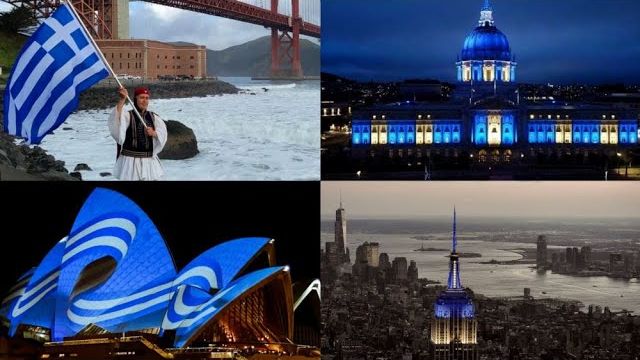
Today, as we watch the Greek flag flutter in neighborhoods across the world, the diaspora remains a testament to the relentless spirit of 1821. Whether through music, food, dance, or dialogue, the diaspora continues to serve as a constant reminder of what it means to be Greek, building up the foundation of modern Hellenism in the ever-globalizing landscape of today.
Before the cannons roared on Greek soil, Greeks scattered across Europe had already united in secret societies like the Filiki Etaireia. All the way from the bustling ports in Odessa to the intellectual salons of Paris, early diaspora pioneers, such as Nikolaos Skoufas and Adamantios Korais, pooled their resources, revolutionary fervor, and courage to support the rallying fight for independence. By shaping the memorable narrative of Greek heroism and the vision of the universal right to freedom, the diaspora was critical—if not essential—in transforming the distant dream of freedom into a reality.
Fast forward to the present, the same Hellenic values that fueled the battle for liberty in 1821 still thrive in the five million-strong Greek diaspora of today. Greeks worldwide are far from passive inheritors of history; they are active, dynamic agents of cultural renewal and civic engagement.
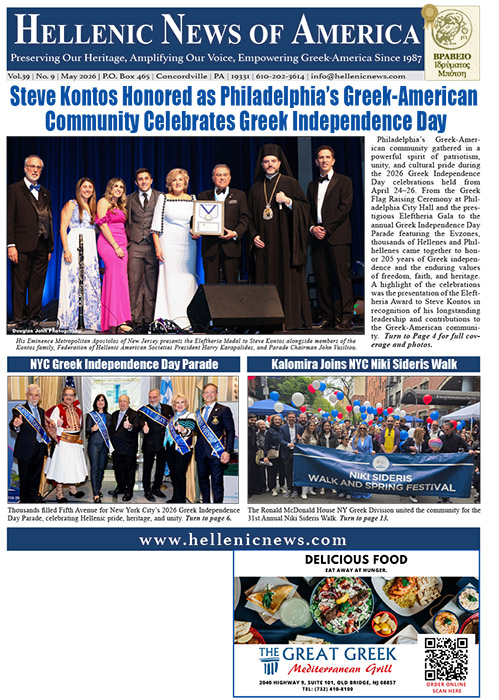
In cities like New York and Chicago, annual Independence Day parades and countless other festivities gather thousands, turning the streets into canvases of blue and white, celebrating what it truly means to be Greek. Language and cultural centers have evolved into thriving hubs of learning and community, where institutions like the Hellenic American Union and similar organizations in Canada and Australia ensure that the rich tapestry of Greek heritage is woven into the lives of future generations. In the world of academia, Greek scholars at Oxford, Harvard, Stanford, and countless other institutions channel their inner Socrates and Plato, fostering intellectual inquiry and shaping the
modern school of thought. Beyond cultural preservation, the diaspora has become a significant economic force, channeling investments and entrepreneurship that support both local communities abroad and economic revitalization in the homeland. Ultimately, the diverse contributions of the diaspora ensure that the revolutionary spirit of 1821 endures, transforming the legacy of freedom into a living, global force for progress.
As we commemorate Greek Independence Day, let us celebrate not only the historical events that unified a nation but also the ongoing contributions of those who preserve the fundamental principles of Hellenic culture, freedom, and resilience. Every Greek, wherever they may be, remains a living testament to a people whose heart beats with the pulse of independence and whose dreams are as boundless as the sea.
—-By Nikolas Giannopoulos, Student Writer (Intern at Hellenic News of America)

 Please wait...