


Despite the challenges, the penetration of broadband in Greece was and remains a demand for the further strengthening of the domestic technological ecosystem. Since the liberalisation of the telecom sector almost two decades ago, investment by operators has led to significant improvement and coverage of infrastructure, facilities and connectivity services. Coupled with the development of the National Broadband Plan, which included a series of reforms, investments and actions, the strong penetration of ultra-high-speed services across the territory is on the rise.
In Greece, there is a significant improvement in network speeds, with Athens recording a significant year-over-year increase in average download speeds for mobile (from 66 Mbps to 102 Mbps) and fixed network (from 50 Mbps to 67 Mbps), mainly due to the continuous development of optical infrastructure and the initiatives of the Ministry of Digital Governance with the Gigabit Voucher and Smart Readiness, that enhance the quality and competitiveness of the country’s digital infrastructure.
In Thessaloniki, an increase is mainly observed in fixed telephony speeds, with the average download speed reaching 81.36 Mbps, while mobile telephony, although it fluctuates, maintains an overall upward trend compared to the previous year.
The improvement is particularly noticeable in fixed telephony, where the availability of Gigabit Vouchers and Smart Readiness as well as the development of modern infrastructure seem to have contributed significantly to the increase in speeds. This development reflects the success of investments in digital infrastructure, providing upgraded services to citizens and creating new opportunities for businesses.
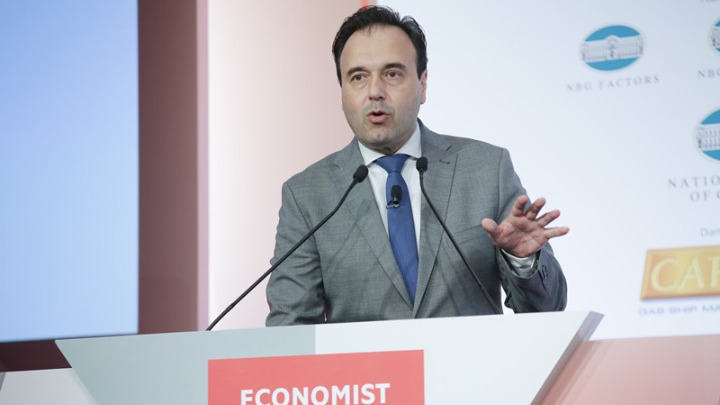
The utilization of every available financial tool as well as the cooperation with the providers will further help the penetration of broadband throughout Greece, the Minister of Digital Governance, Dimitris Papastergiou, said in his statement to ANA-MPA. “The penetration of broadband throughout the country is a serious wager as it has a wider impact on our development path. Our goal is for every household, every business to have access to ultra-high speeds and that’s why we have to look at things based on measurable parameters. In mobile communications we are in a very good situation, while with methodical planning in recent years significant progress has been made in fixed lines as well. Especially if we consider that five years ago we were at 0% in broadband while today we are over 50% in household coverage. However, it is necessary to try even harder with a targeted plan of measures, utilizing every available financial tool but also in cooperation with the investment plans of the providers. More than 47 thousand applications have already been made for the Gigabit Voucher through which thousands of households and businesses obtain broadband connections. At the same time, Smart Readiness is progressing, with which we are upgrading the “smart readiness” of buildings through digital infrastructures and smart meters, and which citizens should “embrace” more”, Papastergiou noted clarifying in parallel that “the development of telecommunications infrastructure is a prerequisite for the release of development and technological potential throughout the territory, but also a factor in strengthening the domestic technological ecosystem”.
SOURCE; ANA-MPA



 Please wait...