

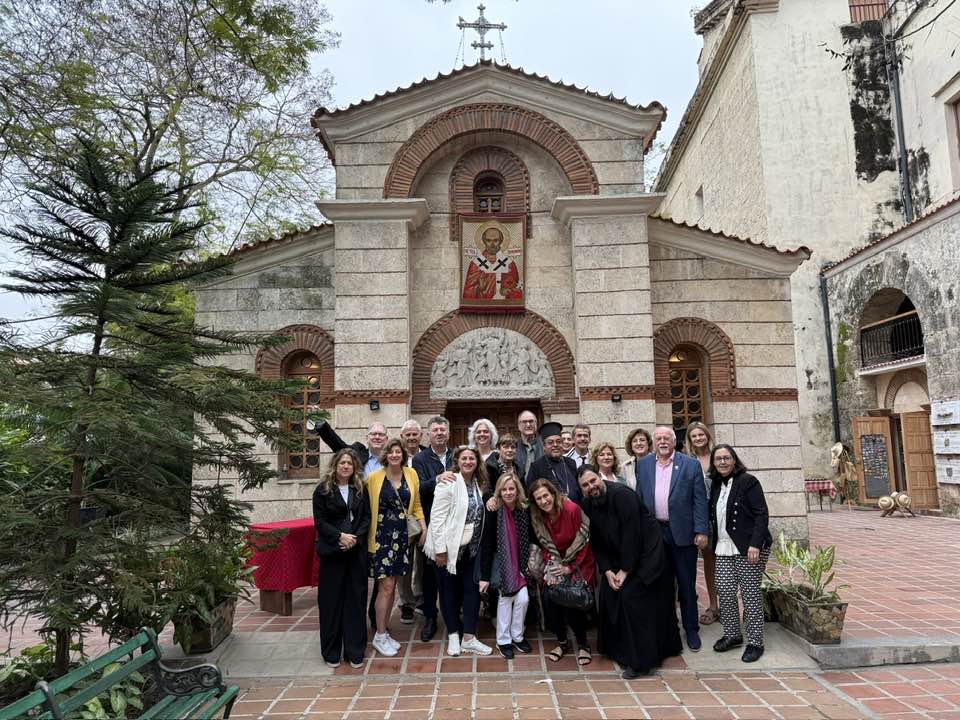

The 20th anniversary celebrations of Saint Nicholas Greek Orthodox Church in Havana, Cuba, were an eye-opening experience that revealed the resilience of faith and the mysterious ways in which God works. This historic occasion brought together a distinguished delegation of Greek Orthodox leaders, including the newly elected Metropolitan Iakovos of Mexico and His Beatitude Archbishop Makarios of Australia, who represented Ecumenical Patriarch Bartholomew. Their presence, alongside several Greek Orthodox Bishops and priests, underscored the significance of this milestone for Orthodox Christianity in Cuba.
 A group of community leaders, led by the Consul General of Panama in Philadelphia, Georgia Athanasopulos, joined the celebrations, witnessing firsthand the progress of the Greek Orthodox Church on the island. Cuban authorities extended remarkable respect and cooperation toward the Church leadership—a relationship that dates back to an unexpected blessing from Fidel Castro, who supported the establishment of Saint Nicholas Church two decades ago.
One of the most impressive and inspiring aspects of this journey was meeting the local Greek Orthodox clergy, all of whom were educated in Greece. Their fluency in Greek, deep knowledge of ecclesiastical traditions, and eagerness to engage with people showcased their dedication to their faith and community. Their warmth and approachability made a lasting impression on all visitors.
Moreover, the visit provided an opportunity to learn more about His Eminence Metropolitan Iakovos, who holds the distinction of being the youngest elected Metropolitan in the entire Greek Orthodox Church. Despite his age, his impressive education and extensive missionary work make him a dynamic leader for the future of Orthodoxy in Latin America.
Beyond the celebrations, the group discovered a significant and urgent need: Since 2020, the number of Greek Orthodox churches in Cuba has grown to five, yet all are in need of renovation and support to better serve the local faithful.
 The Legacy of Saint Nicholas in Greek Orthodoxy
 The Legacy of Saint Nicholas in Greek Orthodoxy
The dedication of the church to Saint Nicholas is deeply symbolic for the Greek Orthodox faithful. Saint Nicholas, one of the most revered saints in Christianity, was born in the 3rd century in Patara, Lycia (modern-day Turkey). He became the Bishop of Myra and was known for his deep faith, compassion, and generosity. His reputation as a protector of the poor and the innocent has led to his veneration as the patron saint of sailors, merchants, and children.
One of the most famous legends associated with Saint Nicholas recounts how he secretly provided gold to a destitute father so that his three daughters could marry honorably, preventing them from being sold into slavery. This act of selflessness cemented his reputation as a bringer of aid and hope, and his legacy lives on through centuries of devotion.
Saint Nicholas is also recognized for his role in the First Council of Nicaea in 325 AD, where he defended Orthodox teachings against Arianism, a heretical doctrine that denied the divinity of Christ. His unwavering commitment to the faith made him a key figure in the early Christian Church.
 Saint Nicholas Church in Havana: A Symbol of Hope
 Saint Nicholas Church in Havana: A Symbol of Hope
The establishment of Saint Nicholas Church in Havana in 2004 marked a turning point for Greek Orthodoxy in Cuba. Prior to its construction, the Greek Orthodox community had been without a formal place of worship. With the support of Ecumenical Patriarch Bartholomew and a surprising endorsement from Fidel Castro, the church was built to serve not only Greeks but also Cubans interested in Orthodox Christianity.
Since then, Saint Nicholas Church has been more than just a place of worship; it has become a beacon of cultural and religious heritage, connecting the Orthodox faithful of Cuba with the broader Greek diaspora. The church provides essential spiritual guidance, education, and a sense of community for its members, reinforcing the Greek Orthodox values of faith, service, and unity.
 As the celebrations mark two decades of Saint Nicholas Church’s presence in Havana, there is a renewed commitment to preserving its legacy and ensuring that Greek Orthodoxy continues to thrive in Cuba. Efforts to restore and expand the church’s reach will require the collective support of the global Orthodox community. The journey of faith in Cuba, much like the story of Saint Nicholas himself, is one of perseverance, generosity, and unwavering belief in the power of divine providence.
This journey was not just a celebration of the past 20 years of Saint Nicholas Church but also a hopeful glimpse into the future—a future where Greek Orthodoxy continues to thrive and inspire in this unique and historic part of the world.

 Please wait...