

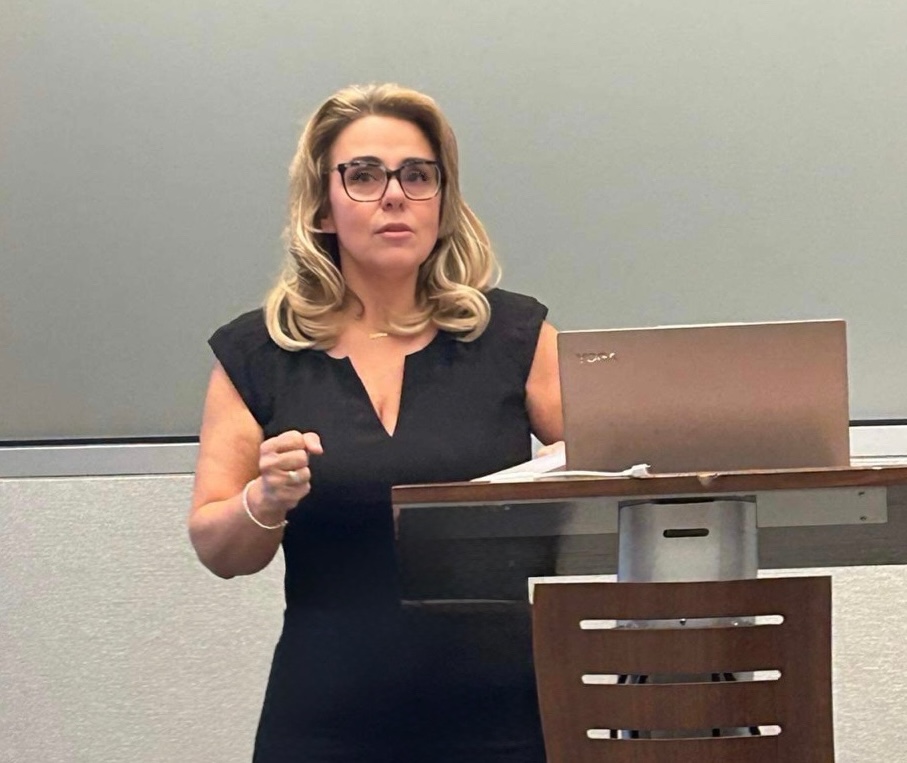

Evelyn Bilias Lolis, PhD
Philoxenia is a defining pillar of Greek culture and a distinguishing emblem of the Greek community. Modestly translated, it means “friend to” or “love of the stranger.” In contemporary usage, philoxenia is often associated with hospitality, a concept the tourism industry has embraced as a signature attribute of the Hellenic experience.
If we examine how modern culture often equates hospitality and philoxenia, we may recognize how readily these philoxenia can be reduced to mere “performative entertaining,” losing the ethos and relational depth that lies at its core. When our focus, consciously or not, becomes how we are perceived by others (i.e., how our holiday home, gifts, cooking, and even philanthropic giving looks to others) then the essence of philoxenia becomes stripped of the very richness that defines it. In both ancient practice and Greek mythology, philoxenia encompassed the recognition and generous sharing of one’s life and bounty with another. The ancient Greek community honored the presence of newcomers, visitors, or those who might take up residence in the area, whether fleeting or permanently. In this way, philoxenia traditionally signified a deeply ingrained ethic of attentiveness, respect, and relational care for others.
If philoxenia is about coming to know, see, and love those around us, we might pause to ask: how deeply do we truly perceive one another? The relentless pace of modern life often impedes this attentiveness, challenging our capacity to practice genuine hospitality and to extend care and presence to those in our midst. Performance culture or “showing” the world what we have materially, what we can do industrially, or how our circle stacks in comparison to those around us dissociates us from genuine connection that is based in mutual care for the inherent worth of every human being. As a result, our children are growing in environments where performance is always “on” and where comparing yourself to others is the benchmark of your worth. This is perhaps the most dangerous consequence of our performance culture. True love, deep Christian love, is not performative; it is not for audiences. It is a selfless giving of self, a philoxenia of the house of our person, to another.
Welcome, belonging, and koinonia (community) in today’s world have medicinal properties. Isolation and disconnection, often caused by feelings of differentness or unrelatability are harmful to our wellbeing and physical health. Philoxenia, or receiving love, tenderness, and care from another in either their physical home or emotional experience, can be a powerful antidote to loneliness. Philoxenia lives in deep human connection.
Wellness is often narrowly associated with physical practices such as diet, nutrition, exercise, and pharmaceutical interventions. While these are undeniably important, a growing body of scientific research demonstrates that many other practices possess therapeutic properties with impacts and outcomes that support wellbeing in profound ways. Among these, human connection is perhaps the most underestimated and yet most unmistakably powerful tool we have at our disposal. Human connection is deeply restorative, with research and CDC briefs underscoring its capacity to enhance quality of life and even extend lifespan. Socially connected individuals consistently experience longer, healthier lives, with lower risks of chronic illnesses and cardiovascular disease, highlighting the critical role of relationships in overall well-being.
The holidays can be especially difficult for many individuals. Members of our family, churches, and community suffer quietly during this season. Some are struggling with the grief and loss of a loved one, others with financial burdens, and many with deepening depression and/or anxiety that can become more pronounced at this time of year. Do we welcome their struggle, pain, or angst with compassion and emotional availability? Our seniors. Our postpartum mothers. Our newly unemployed. Our deployed. Our loved ones or colleagues in recovery. From informal gatherings to formal galas and holiday parties to the holiday itself, December can feel like one continuous open house.
So, beloved Hellenic News of America readers, I leave you with these relational acts that embody true philoxenia during this time of year:
Take time to listen to one another. This includes tuning in to the angst, worry, sadness that can surface this time of you. Connection begins with recognizing and truly seeing those who are in your midst.
Consider members of your community or extended family who may need a call or a visit this holiday season. Call them or even better, plan a short visit. Our traditions are important, yes, but let’s not focus so narrowly on preserving our traditions that we overlook opportunities for new or renewed expressions of love and connection.
Show love and/or kindness to a stranger. A stranger doesn’t only have to be someone you have never met, it can be someone you routinely see but do not know. It can be a neighbor that is a little removed, one of your children’s friends who may need extra attention, or a member of your church or social community who looks like they may need care. A stranger is someone who you have yet to open your heart to.
Spend meaningful time spent in the company of the older generation. Many of us find the joy of Christmas through the eyes of our children, but let me tell you, it is as equally powerful through the eyes and the words of our elders and seniors.
Be openhearted and patient. Open heartedness is by extended definition, philoxenia. In a rushed society, impatience is pervasive and caused us to be short and even blindly dismissive. You cannot open your door to someone (philoxenia) without opening your heart first.
To a blessed and safe holiday season filled with cherished connections, openness for new starts, and deep care and philoxenia to all who God places to cross our path this month and in the new year to come. Εύχομαι υγεία, αγάπη, ειρήνη, φως και καλοσύνη σε όλο τον κόσμο!

 Please wait...