

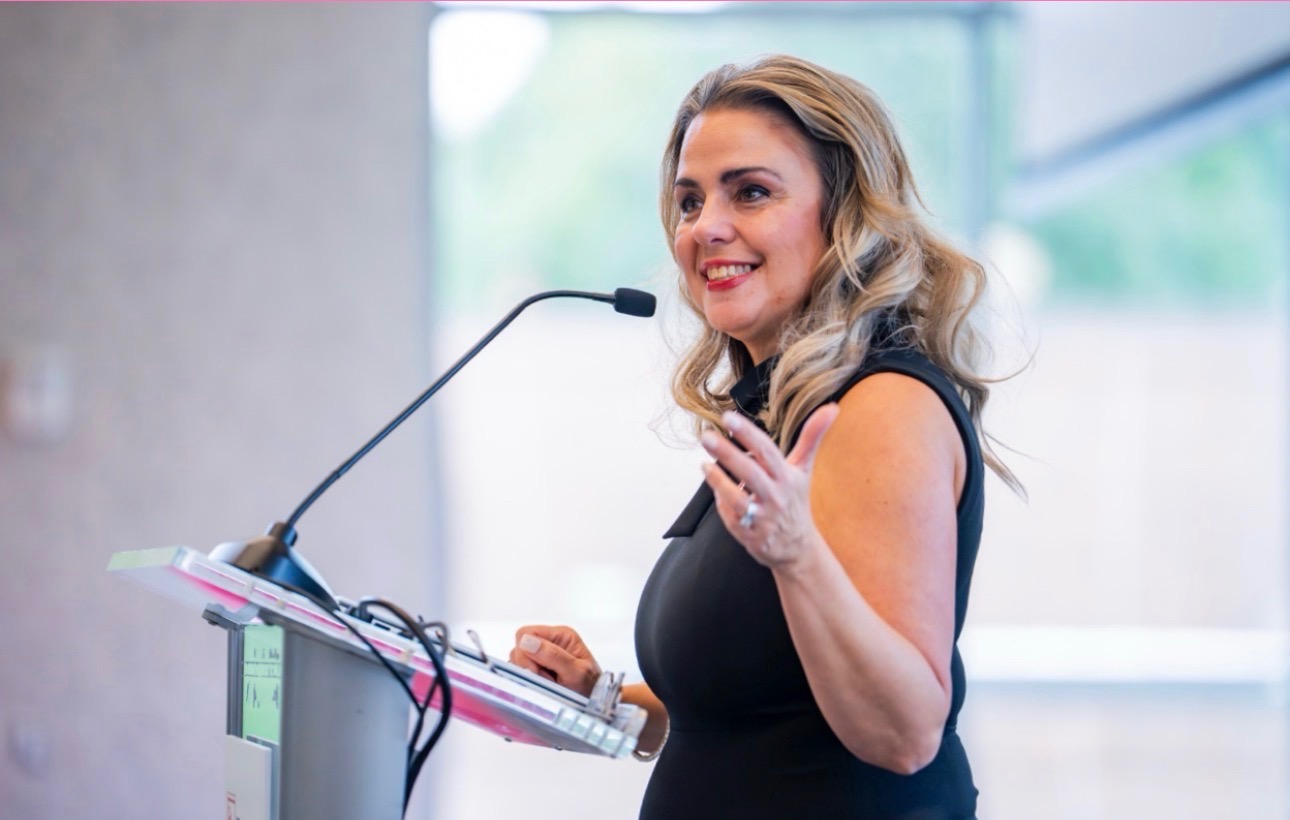

Evelyn Bilias Lolis, PhD.
Mechanics.
Autopilot. Cruise Control.
How many of us move through our days simply executing tasks, checking boxes, meeting deadlines, and fulfilling obligations?
How many teams operate this way, working side by side yet in silos, confined to the mechanics of their roles rather than the meaning of their shared purpose?
How many marriages or relationships become mechanical, with each person performing their part, but slowly losing connection, curiosity, and care?
The truth is that relationships suffer when the mechanics take the lead. Working groups and boards suffer when individuals perform like machinery with little pause for their welfare, health, or mental state. Family members feel invisible when the routines of home and family resemble labor, not mindful care. Most of us are guilty of this as we rush to multitask the demands of our many roles within the web of our small, personal cosmos.
I mentioned in the December column that the loneliness epidemic in this country is one that has gained significant publicity in the last couple of years, with the research outcomes staggering across generations, cultures, and even globally. Many think about isolation in a physical sense, those who have few in their lives, those who physically can’t get to be social. But there is an unspoken culprit, which is equally as isolating: walking through our day and our relationships mechanically, almost robotically.
Did you know that isolation is physically worse for your heart health than smoking 15 cigarettes a day?
When genuine care, healthy communication, and relational accountability are sacrificed for law and order, we inadvertently create climates of disconnection across our lives, homes, and organizations.
Within performance-oriented environments, even parenting can become procedural rather than relational. The impact on children? An internalizing pressure to perform and produce from a very young age.
It is extremely lonely to feel like you are reduced to a function; to experience yourself as merely a contribution to the workflow, whether at home or at work.
So much of the literature on belonging, the very nucleus of human connectedness, reminds us that we long to be seen, not simply used. It is basic human nature to desire to be seen for who we are and valued uncompromisingly. It is this recognition that creates comfort, being seen for who you are in your unique constellation (and at every age and stage of life). It is this feeling “seen” that creates a sense of home in others.
As an educational psychologist and researcher, I have worked with many children and parents who question their inherent worth because the world tells them that love is conditional on how they behave or what they provide. As a clinician, this is heartbreaking to witness, especially in a young person who sits in front of you raw with emotion while questioning their value and importance in the world. Similarly, many adults walk through adulthood feeling the exact same way, that their value and belonging are tied to what they can provide and attain.
Generative AI is the modern example of how mechanics in the absence of heart function. Mechanics get things done, and often with blinders on. The periphery, that is, whatever else is “extraneous” to production flow, the people, the feelings, is marginalized. In a mechanical loop, the main goal is input to output. And even though this is extremely beneficial for task completion, it can be paralyzing for the heart that is required to live, serve, and exist in society.
Human connection is the antidote to loneliness.
Take a few moments each day and try to make time for the following:
Observe when you are operating mechanically for a considerable duration of time. Who is around you? Near you? Take a break and invite them into a conversation. If you are alone, take a break and seek someone nearby or make a call.
Look for patterns when you are more likely to hyperfocus on action items, because usually these are the opportunities where we can shortchange connection.
Commit to work-life balance as a personal mission in your industry, volunteerism, or home. A mission is something you strive for and sacrifice for to sustain and preserve.
Cheers to Heart Awareness Month, Valentine’s Day, and inching closer to Spring.

 Please wait...