


By Aphrodite Kotrotsios | Hellenic News of America
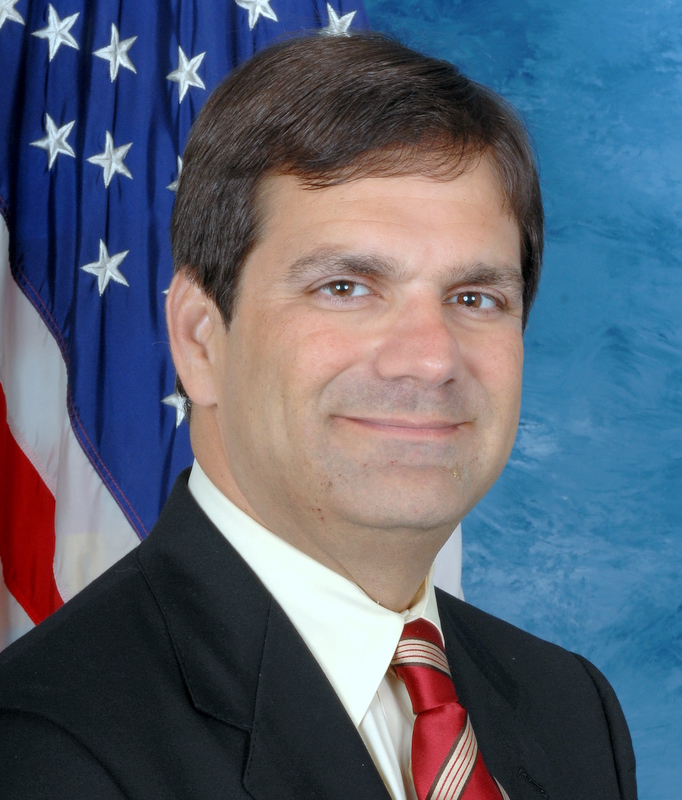
Congressman Gus Bilirakis has spent his life at the intersection of heritage and service, grounded in a Greek-American upbringing, shaped by family example, and guided by a leadership style that prioritizes results over recognition. In a conversation with Hellenic News of America, Bilirakis reflected on what it means to carry a family name in public life, the values that made civic responsibility feel natural from an early age, and the causes he believes should remain at the center of national attention.
Bilirakis followed his father, former Congressman Michael Bilirakis, into elected office, and he views that succession not as a privilege to be worn lightly, but as a standard to uphold. “The Greek way is to keep up the family name,” he said. “That means everything in the world to me.” He described his father’s reputation as a source of inspiration rather than pressure, emphasizing that his preparation came through experience, particularly his years in the Florida Legislature, which he called a strong training ground for understanding how to pass legislation and build consensus.
That theme, building consensus, returned repeatedly throughout the interview. Bilirakis has cultivated a reputation for working in a bipartisan fashion and attributes his success to a mindset that keeps the long-term goal in focus. “You have to pass legislation in bipartisan fashion together,” he said. “So I put my ego aside.” He shared a recent moment that illustrates his approach to relationships across the aisle, describing how he chose to respond to tension with a thoughtful gesture rather than escalation. For Bilirakis, the point is not to win the moment, but to protect the working relationships that make progress possible. “Sometimes our members, they’re short-term, short-term goals,” he said. “I look at the big picture and the long-term goal.”
His sense of identity is inseparable from Tarpon Springs, Florida, one of the most historically significant Greek-American communities in the United States. Bilirakis noted that, based on family history, his great-grandfathers were part of the early wave of Greek immigrants who arrived in the area around the time of the first Epiphany celebrations. He spoke about a family story that spans generations and regions: while his father was born in Tarpon Springs, the family moved during the Depression to Western Pennsylvania, where his grandfather worked in the steel mills. Yet Tarpon Springs remained the family’s anchor, especially through the church. Bilirakis emphasized that multiple generations of his family, including himself, were married in the same parish, St. Nicholas, underscoring the role of faith and community continuity in shaping his worldview.
Bilirakis described Greek identity as something that must be intentionally preserved. “You have to love your culture,” he said. He recalled learning Greek before English, a Greek accent during his early school years, and the familiar immigrant-family humor that comes with it, such as hearing that he once recited the Pledge of Allegiance with a Greek accent. Today, he said, he sees cultural continuity advancing through his grandchildren, particularly through a new generation growing up in bilingual environments. Heritage, he noted, is not only maintained through formal traditions, but through everyday life, music, dance, family gatherings, and the deliberate choice to keep language present at home.
The values of public service, Bilirakis explained, were reinforced by family members whose contributions were quiet but significant. He credited his grandmother’s long tenure in Philoptochos leadership as a formative example of sustained philanthropy. He also shared a story about his father founding a volunteer ambulance service in the early 1970s, sparked by a client’s final request and propelled by a community-wide effort to train volunteers and meet a need that did not previously have infrastructure. For Bilirakis, these examples served as a blueprint: service is not an abstract virtue—it is an action, and it is most meaningful when it directly improves lives.
In discussing faith and Hellenism, Bilirakis expressed strong support for Orthodoxy and the Ecumenical Patriarchate, framing religious freedom as a core principle that extends beyond one community. He spoke about advocating for religious freedom and human rights during travel abroad and described his belief that the continued vitality of the “mother church” matters not only to Greek Americans, but to Orthodox Christians worldwide. He also shared a personal aspiration, to see an Orthodox liturgy held at Hagia Sophia on major feast days, acknowledging that such a goal may require time, but emphasizing his belief that “nothing is impossible.”
Beyond Hellenic affairs, Bilirakis highlighted healthcare policy as an area where public service becomes deeply personal. He spoke about prioritizing rare disease advocacy and initiatives that support children and families in need of treatment and cures, along with ongoing focus on chronic illnesses including diabetes. He also referenced Alzheimer’s research and awareness, sharing that the issue touches his own family, as his mother has Alzheimer’s. He further emphasized his commitment to veterans, calling them “true American heroes” and reaffirming that their care and dignity should remain a national priority.
Asked what ultimately sustains a life in public service, Bilirakis returned to a single idea: purpose. He described himself as someone driven by the desire to make a difference, shaped by community and motivated by the belief that leadership must be anchored in character. “It’s all about the heart,” he said. “The heart of a public servant.” In Bilirakis’ view, legacy is not merely inherited, it is earned through consistency, humility, and work that remains focused on people, not applause.

 Please wait...