


Between Control and Surrender: An Easter Reflection on the Journey of Becoming
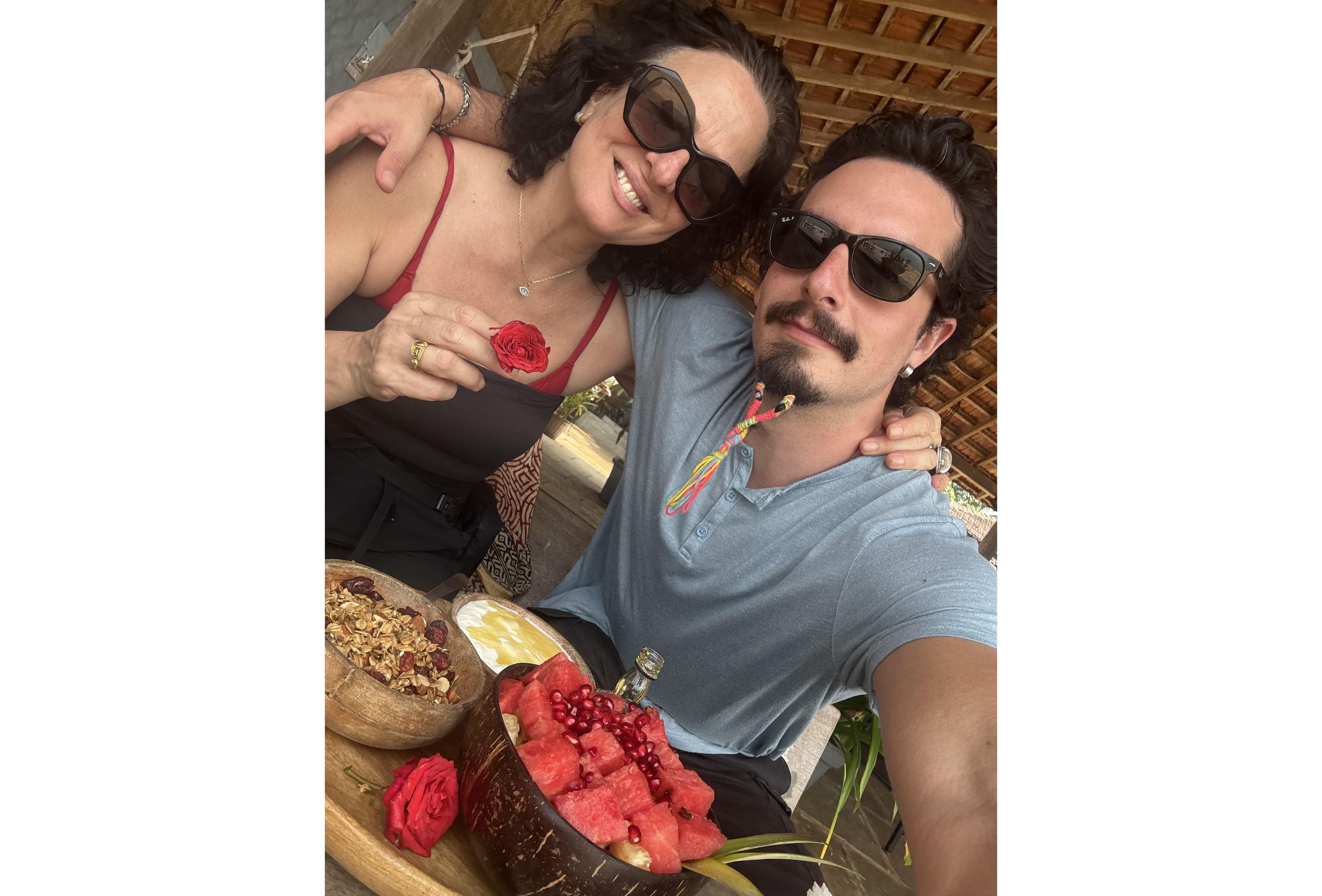
I recently returned from India, traveling there with my son, it was the first time we experienced that land together. What struck me most was not only the places we visited and loved, but how differently we perceived them and how each of us, added to reality through our perception. It was a profound reminder: reality is not fixed. It is filtered through who we are, what we carry, how we see and how we are seen.
This awareness brought me back to a question that has followed me for over 30 years of traveling to India: how much of our life is in our control, and how much belongs to something greater?
In India, this question is not abstract. It lives in the understanding of karma, cause and effect, that every action, every intention, participates in shaping what comes next. Life is not random. It is patterned. And yet, within that pattern, there is humility. Because while we participate in shaping our lives, we are not shaping them alone.
There are forces beyond our individual will, that is timing, circumstance, other lives intersecting with ours, and the vast field of the unknown. We are given certain containers: where we are born, what we encounter, the challenges that arise. Within those containers, we move, we choose, we act.
So how much do we actually control? Most of us live inside that tension. We try to direct our lives, and then something interrupts the plan. Loss. Disruption. Illness. Change. Moments that feel wrong, moments we would never have chosen, moments we might call tragic. And yet, with time, sometimes years, sometimes decades, we begin to see that these moments are not interruptions at all, but part of a deeper arc.
What we often call “traumatic” is, in fact, part of the path.
This is the essence of what has long been described as the hero’s journey. Greek myths articulated this structure with remarkable precision: the call, the departure, the trials, the descent, the loss, and eventually, the return, in that transformed. No one begins that journey willingly. One is brought there by necessity.
It begins when something breaks the familiar patterns. When the life we thought we understood no longer holds, when we are pushed beyond the boundaries of comfort into terrain we did not choose. In that space, we lose something. Sometimes certainty. Sometimes identity. Sometimes people we love, or the version of ourselves we believed we would always be.
And yet, it is precisely through that loss that something deeper begins to form, if we allow it, if we are willing to notice.
Looking back across my own life, and through decades of returning to India, I can say something with a clarity I did not have before: everything unfolded as it needed to. Even the moments of deep questioning, when it felt as though something had gone irreparably wrong, were not outside the journey. Those moments are the building blocks.
Each experience became part of the architecture of who I am. It shaped my perception, deepened my capacity, and refined my understanding of others and of life itself. What remains now is gratitude, a grounded, undeniable gratitude for the totality of it.
This reflection returned to me with particular force during Greek Easter. In the Orthodox tradition, we are not asked to avoid suffering, we are asked to pass through it. Holy Week is based on sorrow, betrayal, loss, and the ultimate sacrifice of loss of life, the complete collapse of control. And only through that descent does resurrection become possible.
This is not only a religious narrative. It is a human one.
We see it echoed in psychology, where growth often follows disruption. When our internal structures break, the mind reorganizes. New pathways form. New understanding emerges. In neuroscience, challenge reshapes the brain, allowing for greater depth, resilience, and complexity. Even in physics, at the quantum level, reality itself is not fixed, it exists in states of possibility, shaped through interaction. What appears stable is, in truth, dynamic.
Across these fields, a shared principle emerges: transformation does not happen without rupture.
And it is here, in the quiet contemplation of resurrection and the nature of growth that this understanding deepens. This is how I paint: each work a rupture and a transformation, shifting with light, revealing that nothing is fixed, everything is in process.
This does not mean suffering is something we seek. But it does mean that when it arrives and it does, for all of us in different ways, it carries within it the possibility of evolution.
There is something about losing control that strips away illusion. When control dissolves, we are brought into direct contact with what is real. We are no longer managing appearances or outcomes, we are simply here, meeting life as it is. And in that meeting, something begins to shift.
We discover that while we cannot control the entirety of our experience, we are not without agency. We can control our respond. We can choose presence over resistance, awareness over reactivity. We can remain in relationship with what is unfolding, rather than turning away from it.
This is where the true movement of the journey happens, not in avoiding difficulty, but in allowing it to transform us.
And this is where the teachings of India and the symbolism of Easter quietly converge: in the understanding that life unfolds through cause and effect, yet remains larger than our individual will. That what happens to us is not always ours to choose, but what we become through it is.
For many of us, this understanding comes only with time. But when it does, something softens. We stop asking why things went wrong and begin to see how they formed us. We stop resisting the limits of control and begin to participate more consciously in what is.
And slowly, almost without noticing, we return, not to the life we had before, but to a deeper relationship with life itself. More aware. More present. More whole.
This is the quiet triumph. The integration of suffering into something else. Not control over life, but coherence within it.
Perhaps this is what Easter ultimately reveals: that through loss, through chaos, through the breaking apart of what we thought we are, and how things should be, in fact, we are being led, through the journey of becoming, into something greater than we could have imagined.
Agni Zotis
www.agnizotis.com


 Please wait...