

By Terry Poulos, special to the Hellenic News of America
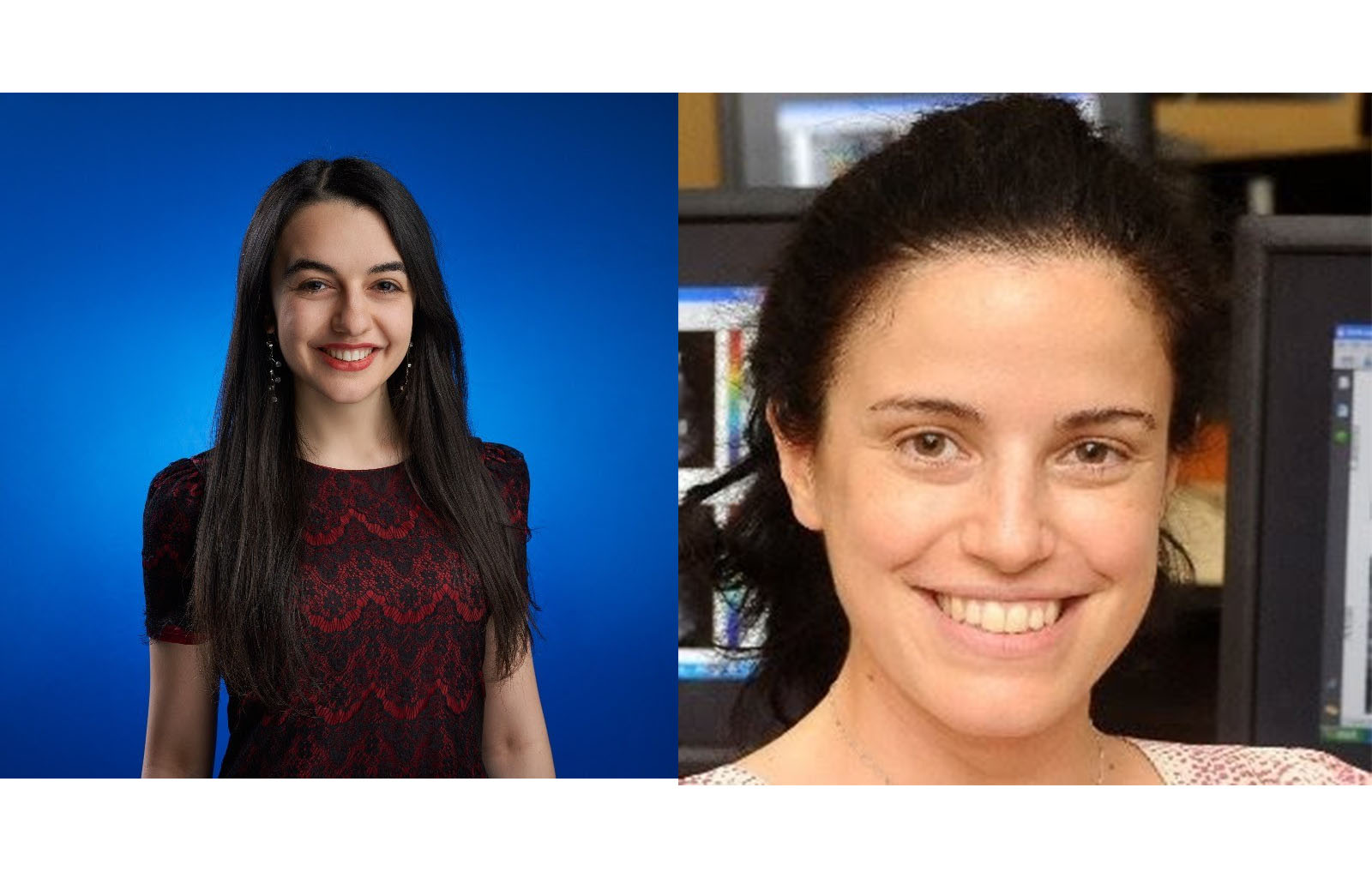
NON-INVASIVE BREAST CARE: While the invention of the pap smear test by Georgios Papanicolau has been a blessing, it’s also highly uncomfortable for women. Columbia University bioengineering professor Elisa E. Konofagouis devising new methods involving ultrasound for non-invasive treatment. One of Dr. Konofagou’s concentrations is “novel imaging techniques and applications for breast elastography.”
FIRE SATELLITES, ARTEMIS: Just in time for the Summer wildfire season, the European Space Agency announced that four new wildfire-tracking satellites for Greece have been launched…Aeronautical and astronautical engineer Periklis Papadopoulos was on the team that helped launch NASA’s historic Artemis mission to the moon. Papadopoulos earned his Ph.D at Stanford and is now a professor at San Jose State.
STRING THEOROS: Ph.D candidateSotirios Mygdalas of the Perimeter Institute in Canada this January co-published a paper concerning spacetime quasicrystals in which the authors “show how such structures may be generalized from Euclidean space to Minkowski spacetime.” The scenario translates a 3+1D universe (3 space, 1 time) into a 9+1 torus, matching the 10 dimensions posited by Superstring theory. Incidentally, this columnist contributed a string theory-related sculpture titled “String Theoros” as part of the 2019 Chicago Greektown street art exhibition.
HYDRO-ANTHROS CRITICALITY: Professor Foivos Perakisof Stockholm University was part of a team of researchers who recently found experimental evidence for a previously theorized critical point in supercooled water. Their study was published in Physics World, which adds, “water is the only supercritical liquid known to be present under conditions where life exists.” Nature may be revealing her hydro-anthropic methods.
SCIENCE COMMUNICATORS: The area of science communication is experiencing explosive growth. In the age of AI and quantum computing, the public has become fascinated – and at times frightened – with all-things-science (nod to my editor and publisher for having the foresight to allow space for this column). We Greeks, inspired by the likes of mathe-magician Pythagoras, atomist Democritus, natural philosophers Plato and Aristotle, and inventor/mathematician Archimedes, have become even more enthralled with science than the general public. It’s in our ethos. As fate would have it, modern Greeks are becoming forefront as Sci-Psi wonder documentarians…Konstantin Kakaeas, writing for Quanta Magazine, makes the claim “The AI revolution in math has arrived” and we may be on the cusp of cracking some of the most long standing and profound unsolved theorems and hypotheses in mathematics. Kakaeas has a degree in physics from Harvard and has written for some of the most respected science journals in America…Dr. Maria Violaris, an Oxford physicist, quantum computing expert and science communicator, has been steadily gaining a following on social media and YouTube. In this video, she conducts a thought-probing interview with Professor Tim Palmer on chaos and nonlocality (what Einstein called “spooky action at a distance”) and the two explore whether or not quantum reality is fractal in nature.
5 GREEKS CO-AUTHOR NEONATAL STUDY: In March, five Greek scientists co-authored the paper “Introducing whole genome sequencing in newborn screening in Greece: ethical, clinical, and policy considerations in the European context” that appeared in the European Journal of Human Genetics. The study’s co-authors are Athina Ververi, Manolis Kogevinas, Takis Panagiotopoulos, Charalambos Savvakis, and Manousos Papadakis.
YOUNG SHELIOS: “Young Sheldon” (spinoff series from “The Big Bang” TV show), meet Young Shelios, budding Greek astrophysicist. Greece native and 15-year old prodigy Viktoras Giannikopoulos submitted a proposal to NASA that was accepted and now he’s collaborating to see it through fruition. This script mirrors a 2017 episode of Young Sheldon, who was a pre-teen theoretical physicist prodigy. Shelios’ proposal involves an extension of NASA’s real-life Voyager I and II probes from the 70’s that were launched to the outer regions of the solar system. Young Shelios is hoping his version can go up by 2035. Trivia: Voyager II was launched on a Titan-Centaur rocket.
MEMORY ETERNAL: In May, the publishers of the blog Big Think wrote of “The 2-step `loci method’ for memorizing absolutely anything.” They trace the method to Simonides of Ceos (5th century BCE). “And like many intellectual traditions, it comes from the ancient Greeks,” writes Big Think. Well, yeah!
PLATO, PLEIADES, MYTHOS: In late April, an astrophotographer captured a stunning image of the Pleiades cluster (named after the ‘Seven Sisters’ of Greek mythology), awe-inspiring enough to be covered in the journal Space…Also in late April, Plato “aces space-like tests, keeping hunt for Earth-like worlds on track,” writes ScienceX. Plato is a cutting-edge space probe belonging to the European Space Agency. After its planned January launch, Plato will begin seeking planets that have atmospheres hospitable to life as we know it…Myth or Psi-ops? Top AI company Anthropic (another Greek derivative) recently warned that its newest algorithm, named Mythos, is capable of decrypting even the most secure computer systems, which would compromise the entire internet. To be certain, that would be an unmitigated disaster. One week later, the headline “Rogue group gains access to Anthropic’s “dangerous new Mythos AI” appeared in Futurism. Either this is a clever PR psyche tactic to rally investors, or it’s partially true, or we might have an estimated five months to prepare for a cyber firestorm. Best to practice awared-ness, if not preparedness…A new study indicates 72% of all names for Mollusks have an etymology tracing to Greek words. Mollusks are the second-largest animal phylum after Arthropoda, yet another Greek derivative.
PRESIDENTIAL SCIENCE ADVISOR: Greece’s Ambassador to the United States, Antonis Alexandridis, recently met with Mike Kratsios, President Donald Trump’s chief science and technology advisor, to discuss expanding cooperation and sharing of technology between the two nations.
Terry Poulos is a writer, artist and fractal geometer who synthesizes theoretical physics, number theory, archaeology and ancient and modern technology. His general art/science musings can be viewed at Scientiquity.com and Scient iquity.medium.com

 Please wait...