


Robert Zaller
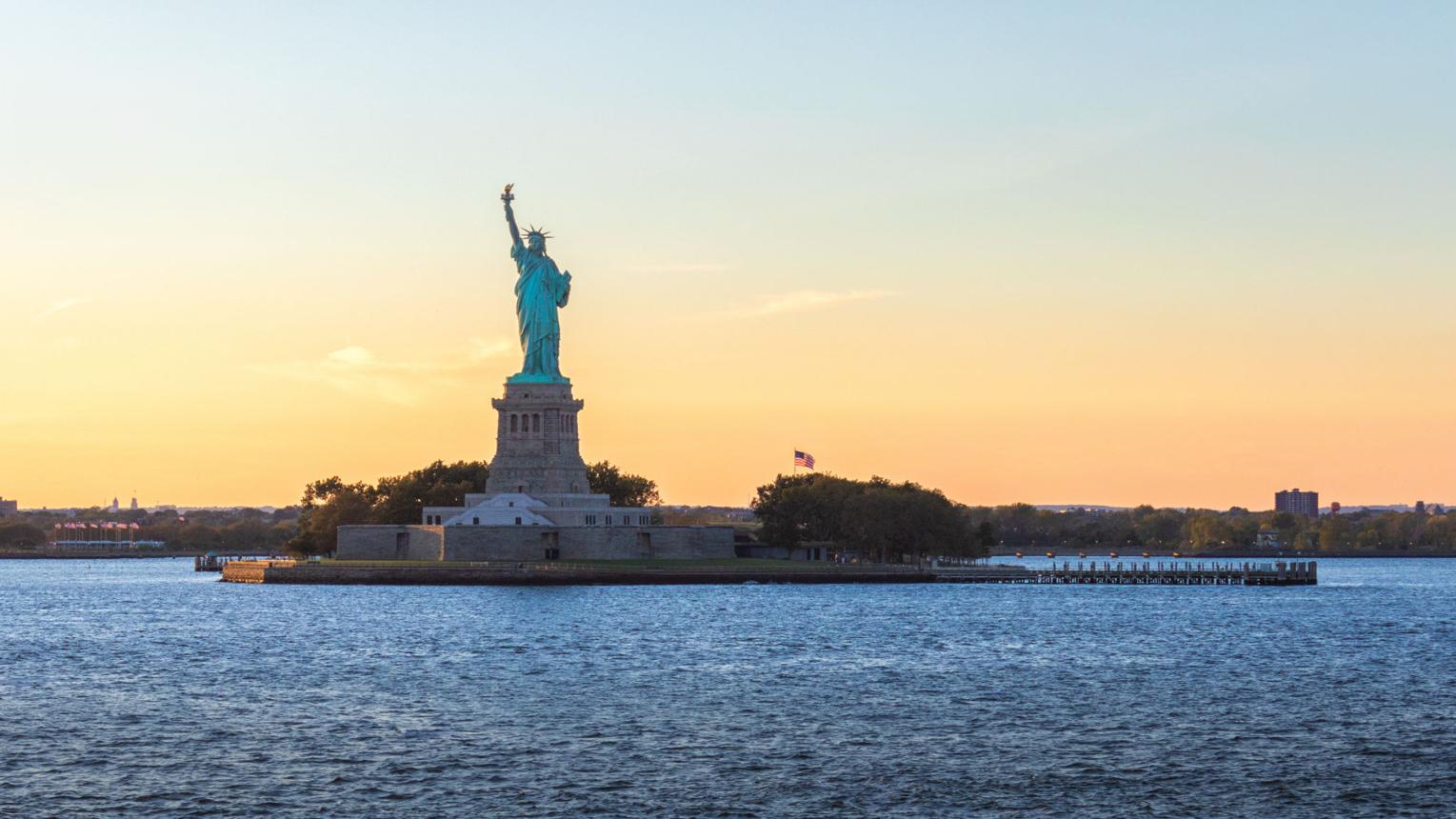
At a quarter of a millennium, the United States of America has been the most powerful nation in the history of the world. No polity has risen to greatness so rapidly, nor imposed its dominance more thoroughly. The major civilizations of the world—China and India, Egypt and Greece, Imperial Rome—matured slowly, and nationalism itself has enabled the consolidation of political and cultural authority as never before. Within forty years of its effective foundation and not yet of continental size, America had claimed hegemony over an entire hemisphere, and effectively made good that claim. It was not only a world power almost by default, but also, as nowhere else, a vision of the future. The European revolutions of the late eighteenth century had been partly inspired by the American one, but America’s alone had prevailed to create a lasting republic. It was a cynosure, but also a great experiment. Democracy had failed everywhere in Europe by 1815, as it did again in 1848. Could it succeed in America? As the crisis of our Civil War came, all eyes were upon it. When the Union seemed to have prevailed, the citizens of France offered America the greatest gift ever made by one nation to another: the Statue of Liberty. And, in two world wars, that gift was returned in the freeing of a conquered Europe itself.
A century has now passed, and where are we? America’s wealth and power have vastly increased, and only a few years ago we seemed not only an irresistible model for the planet but its worldwide leader. That leader is what our current president wishes to celebrate. It is more its troubles, however, that are apparent at the moment. America’s virtues have indeed been and still are real. Many millions once found what another president called the Great Society in them. But, as we prepare to observe our semiquincentennial anniversary, we find ourselves more uncertain and divided among ourselves than at any time since the Great Depression or even, as many suggest, the Civil War itself. Moreover, we are regarded abroad not with support and concern by former allies but with abandonment and, frequently, resentment. What has happened to us? What can we do about it?
For many, as polls indicate, most of us now would reply to both questions with two words: Donald Trump. Trump is the paradox of our times, someone representing the absurdity and inevitability of our political moment, or, as Lydia Polgreen of The New York Times asks and answers the question, “Is Trump a freak of history or its fulfillment, an aberration or a culmination? The answer, surely, is both.” Few figures less qualified to wield power have ever been chosen to do so; no one, after fantasizing its achievement for decades, has ever been more terrified at its realization, as all who saw Trump’s incredulity when the fact that he had actually defeated Hillary Clinton registered on his face on election night in 2016 can recall. Many were left to wonder why he never conceded defeat to Joe Biden four years later, insisting not only that he won every state race he ran in by a “landslide” but demanding that any campaigner who ran with or beside him affirm this claim. Only his closest affiliates dared challenge this, and only they in private. Of course, dictators in staged elections make pro forma claims to the same effect routinely, but Trump made them repeatedly and insistently, as though no other outcome could have been true. More bizarre yet, he tested them in dozens of state courts before judges both Republican and Democratic, without a single affirmative result. Did Trump himself believe them? On one occasion, he appears to have asked intimates how he could possibly have lost his election to Biden. Whether that was an actual concession however may be regarded as problematic. My own opinion is that if Trump was ever to admit losing an election he could never have entertained winning one.
The larger question however is how Trump could have won not one but two presidential elections, what that tells us about the state of our democracy, and what it challenges us about its future. Trump’s first candidacy was taken seriously by few. With no experience of office, he entered a field of seventeen Republican primary candidates, including the son of two former presidents. The only advantage Trump possessed except name recognition as a TV personality was that, with so many others in the field, individual primaries could be won with a minuscule percentage of the vote. He made full if unexpected use of this by campaigning directly with his target public on a populist platform. His promises, at any rate the ones he emphasized in his catchy slogan to “Make America Great Again,” included a return of long-lost manufacturing jobs, support for unions, an increase in the national minimum wage, a 35% cut in federal taxes for middle-class families, six weeks of guaranteed paid leave for workers, and a repeal of the much-denounced North American Free Trade Association. On the other side of the ledger was a pledge to raise taxes on the rich (the amount unspecified), a ban on the tax-shielding movement of corporate profits overseas, and the elimination of the notorious carried interest loophole. Unmentioned, at least to the cheering audiences who came out to his open-air rallies in a trademark baseball cap, was the proposal to lower the corporate tax rate from 35 to 15 percent. Since military spending and veterans’ benefits were also to rise, little was left to be cut but entitlements. But Social Security, too, was untouchable.
What Trump didn’t mention was that he planned to cut the corporate tax rate from 35% to 15%. It did go down, in his first administration, to 21%, which with the carried interest loophole that remained and others that expanded it, created the largest peacetime deficits since the Great Depression and enabled some of the country’s largest corporations to avoid taxation entirely. To this is now added the billion dollar a day cost of our undeclared war in Iran, whose final expense, as in all wars, will be greatly multiplied. Trump is meanwhile “paying” for all this by randomly slashing and eliminating government agencies and firing hundreds of thousands of federal employees—almost the last unionized workers in the country.
Trump is of course in a class by himself, but he is only the end product of a long process, however exacerbated by a reign of lawlessness and corruption unprecedented in our history. But America was not settled easily, nor did it grow so. Its earliest colonists saw a vast continent that offered the single most vital commodity of the preindustrial world, land and the resources that came with it. To exploit them, though, required clearing a great wilderness, one pioneer and one community at a time. The very first of them, in New England, were led forward by the sense of a divine mission, but also with the burden it imposed. Two centuries later, America’s first great observer, Alexis de Tocqueville, wrote eloquently about the trials, dangers, and loneliness of those who, field by field and farm by farm, cleared the expanses westward. Nor were the cities as they emerged less challenging, with the exploited labor of immigrants and the caprices of the markets. Great fortunes were achieved—and great poverty endured. And, at the very bottom, slavery was the lot of millions. Justice was worked toward slowly, and rarely secured—for women, for minorities, for those who laid the rails and worked the mills and picked cotton under the lash—without struggle.
For some of these reasons and despite others, America had become by the turn of the twentieth century the world’s most powerful country. Its founding fathers, divided as they were on many subjects and skeptical of the federal constitution they were constructing, nonetheless shared a vision of national greatness, and strove toward it. This was evident from the first decades of the Republic, from the Northwest Ordinance to the Louisiana Purchase—the first major example of presidential overreach—to the Monroe Doctrine and the Mexican-American War, which extended the United States to the Pacific Ocean and, shortly enough, the gold mines of California. The Pacific itself was not an obstacle, for by 1853 the American navy had forced commerce on Japan from the barrels of its cannons. By 1900, it had established a land base in Asia with the conquest of the Philippines, a bloody war barely remembered in the history books.
But American history was more complex, for the abiding, quasi-religious sense of the country as a unique experiment and the bioceanic separation of it from Europe and Asia also nurtured a sense of it as a place apart, a “city on a hill” in the words of the seventeenth-century New England minister John Winthrop. In political terms, this came to be known as isolationism, the attitude more than the ideology that America stood best when it stood apart. As America assumed a role of world leadership in the aftermath of World War II, isolationism faded though it never entirely disappeared, and it has had an unexpected revival in the figure of Donald Trump, whose espousal of an “America First” approach to world affairs has rewritten the book on foreign relations, at least for the time being.
America’s abrupt reversal has had significant effect on the world of nations, magnifying certain tendencies and diminishing others. In general, nationalism has been stimulated and to some degree exacerbated, as the more or less consensual web of relations centered around America since 1945 has been weakened or ruptured. Together with this, there has been a drift to the right across many areas, from Argentina to India and across much of Europe, although there have been exceptions such as Brazil and Hungary. In the most extreme cases, Trump has claimed or demanded direct annexation of states or territories (Canada, Greenland), and occupied or threatened others (Venezuela, Colombia, Cuba). This might appear to be aggression rather than isolation, but perhaps isolation-by-incorporation might be a more suitable description for what Trump has called the “Donroe Doctrine,” by which America seeks to expand into neighboring areas by agreement, surrender, or military occupation.
This may seem a difference of style more than substance when compared to the previous era of the Cold War that pitted Soviet Russia against the United States. The ground rules of that period, which, set out by the U.S. through the United Nations, prescribed that no state might justly seek to injure or conquer another by force of arms. It was aimed at Russia’s professed goal of world revolution, and its actual occupation of a belt of so-called “satellite” states in Eastern Europe, liberated from the Nazis by the Red Army in World War II only to be controlled by Moscow. To defend the remaining states of Western Europe, America organized a military alliance, the North American Treaty Organization. This formed the model for a worldwide system of such alliances designed to hold Russia in check around the globe, anchored by American military bases, eventually exceeding a hundred in number with most still active. With its vast navy patrolling the seas, America was in effect an empire that governed the world outside the former Communist bloc and the loose dependencies of the Third World.
How then, barely a generation later, has America found itself isolated, mistrusted, and even in certain quarters scorned? I think we must go back to our last great crisis, the Great Depression. We have thought of ourselves as a middle class society, with opportunity open to all freemen. A century ago, however, what we would have thought of as middle class—a merchant and professional class, narrowly hoisted on an agricultural and industrial base almost wholly unorganized and at the mercy of markets, banks, and corporate interests—was no more than fifteen per cent of the workforce. The collapse of credit with the crash of 1929 would put a quarter of the country out of work within three years, with another quarter perilously surviving on half pay if that. Only massive deficit financing by the federal government, much of it for great public works projects, brought the country to an uncertain recovery, and only World War II created full employment. By the war’s end, with America accounting for some half the world’s production and commerce, an industrially-based middle class had at last become a genuine possibility.
It was not to be for long. As Germany and Japan in particular undertook postwar reconstruction and other economies more slowly recovered, America’s dominion shrank. Lyndon Johnson’s War on Poverty aimed to address America’s sizable underclass, which was halved over a decade from 23 to 12% of the population, but grew again when Richard Nixon cut its programs and his successors did not reinstate them. The oil crisis of the 1970s imposed by Arab sheikdoms produced energy shortages and a protracted recession. Union membership, legalized after much struggle, steeply declined, over time approaching the vanishing point in the private sector. Industrial employment plummeted as technological innovation made the assembly line obsolete while cheap foreign labor replaced it and conventional wisdom in both political parties proclaimed the transition to a service economy in which what remained of unions would, effectively, have no place. As working and middle class incomes fell while prices rose for staples such as housing, much of it connected to subprime mortgages that predictably fell into default, a crash—the largest since the Great Depression—finally arrived in the first decade of the new century, throwing millions out of work and out of their homes as well. After that had sapped the remaining wealth of a broad swath of the population for a decade, COVID-19, estimated now as the fifth most lethal pandemic in recorded history, afflicted more than 100 million Americans and killed over a million. With a government whose public face is one of billionaires led by a president whose primary interest has been personal enrichment, this midpoint of our national experiment seems to many of us a low point, and we in many respects unrecognizable to ourselves.
And yet, we can and must look not only at but beyond our present moment. We have never been a perfect union. Such things do not exist, even as we strive for them as no other society ever has. The words that guide us as no other nation ever has been guided—“We hold these truths to be self-evident, that all men are created free and equal”—were written by a slaveowner—and those, the words that through two hundred and fifty years have inspired the human race more than any other, were ones, that as Thomas Jefferson himself recognized, represented aspiration as much as fact, goal as well as achievement. America is still a land of hope, and thus of promise. It is I think not wholly an accident that the names of the two public martyrs the strife of this year has produced—“Pretti” and “Good,” the names of a nurse and a mother—suggest something more than personal identifiers.
I think, too, of myself, as the son of immigrants, that had I been born on the wrong side of the Atlantic I would not in all likelihood have lived beyond my second or third birthday. And as I write these words, I read the correspondence of two political rivals whose rancor was such as to require a constitutional amendment to separate them, the Virginian Thomas Jefferson and the New Englander John Adams, our second and third presidents. Late in life, they were brought together by a fellow signer of the Declaration of Independence, the Philadelphian Benjamin Rush, who among other things was one of the early opponents of one of our still-remaining sins, capital punishment. The two men, both well into their seventies and among the last surviving signatories of the Declaration, did not require a period of reconciliation. They understood the great moment that destiny had assigned them, and the great task that history had left them. Their differences were behind them, and their mutual respect remained. They died together on the fiftieth anniversary of the world-defining day they had shared, July 4, 1826.

 Please wait...