

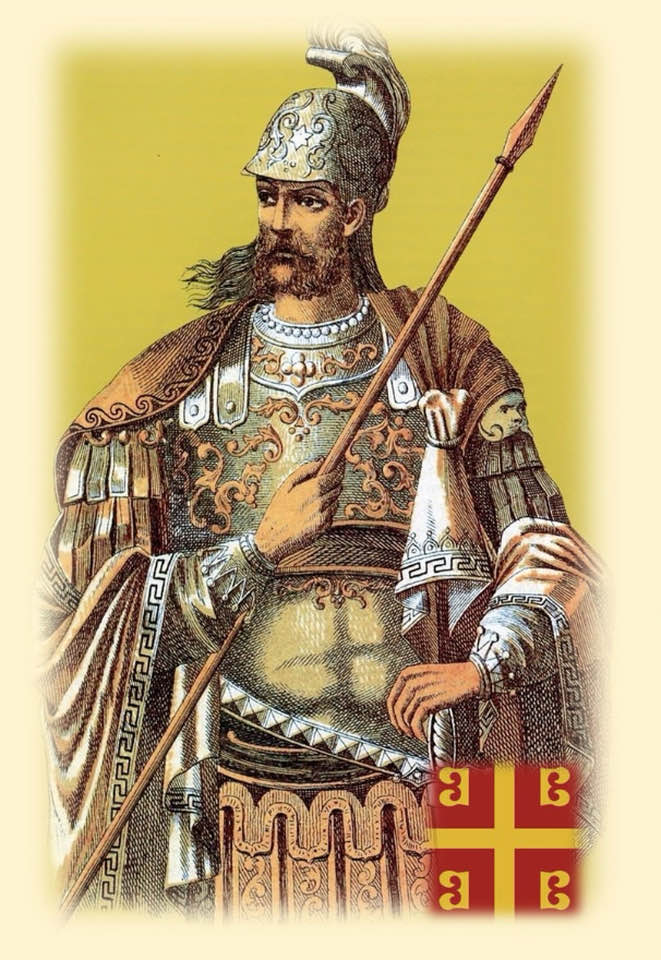

On May 29, 1453, Constantinople, the magnificent capital of the Byzantine Empire, fell to the Ottoman Turks under Sultan Mehmed II. This date marks one of the most pivotal moments in world history, closing the final chapter of the Eastern Roman (Byzantine) Empire, which had endured for over a thousand years.
The “Alosis” (Ἅλωσις) — the capture — of Constantinople was not just the fall of a city but the collapse of a civilization, a bastion of Orthodox Christianity, Hellenic culture, and Roman law. Its great walls, once thought impregnable, finally gave way after a 53-day siege. The fall reshaped geopolitics, severing Europe from Asia Minor and setting the stage for the rise of the Ottoman Empire as a global power.
For Greeks and Orthodox Christians, the memory of that day is not just historical; it is deeply emotional. It has inspired centuries of songs, laments, and poetry — keeping alive the memory of Constantinople as the “Queen of Cities” (Βασιλεύουσα), the lost jewel of Hellenism.
One powerful literary tribute comes from poet Kyriakos Andrikopoulos, who beautifully captures the sorrow and resilience of the Greek spirit after that fateful day. His poem is a heartfelt reminder that the Fall of Constantinople is not just a distant event but a living memory in the heart of the Greek nation.
⸻
Poem by Kyriakos Andrikopoulos — “May 29, 1453”
Στις 29 Μαΐου, στης Πόλης τα τείχη,
πέφτει η Βασιλεύουσα, φωνές, θρήνοι κι οδύνη.
Μαρμαρωμένος βασιλιάς, σπαθί στο χέρι σφιγμένο,
με την καρδιά του πολεμά, με το κορμί πεσμένο.
Πέρασαν χρόνια και καιροί, μα η πληγή δε κλείνει,
στου Ελληνισμού τη μνήμη πάντα φωτιά αφήνει.
Μάνα που έχασε παιδιά, πόλη που έγινε θρύλος,
στων αητών τα πέταγμα, ακούς ακόμα ψίθυρος.
Στην Αγιά Σοφιά το φως, λιγοστεύει στο σκοτάδι,
μα η πίστη δε σβήνεται, λάμπει στου κόσμου το χάδι.
Μια μέρα θα σημάνει ξανά, όπως παλιά το βλέμμα,
η Ρωμιοσύνη δεν χάνεται, όσο κρατά το αίμα.
⸻
As we mark this somber anniversary, we remember not only a city but a civilization — one that shaped the faith, identity, and resilience of the Greek people. The Alosis of Constantinople remains a symbol of endurance, faith, and the unbroken thread of Hellenism across centuries.


 Please wait...