


By Antigoni “Anna” Papakirk
After the insipidity of final exam season, in which countless hours — days, even — were spent cooped up in the library, nothing sounded more appealing to me than a trip to Greece. Just to be clear, a trip to Greece always sounds like a wonderful idea, no matter the circumstances nor time of year; however, during an intense week of studying and exam-taking, I would feel at ease when I dreamt about basking under the Mediterranean sun.
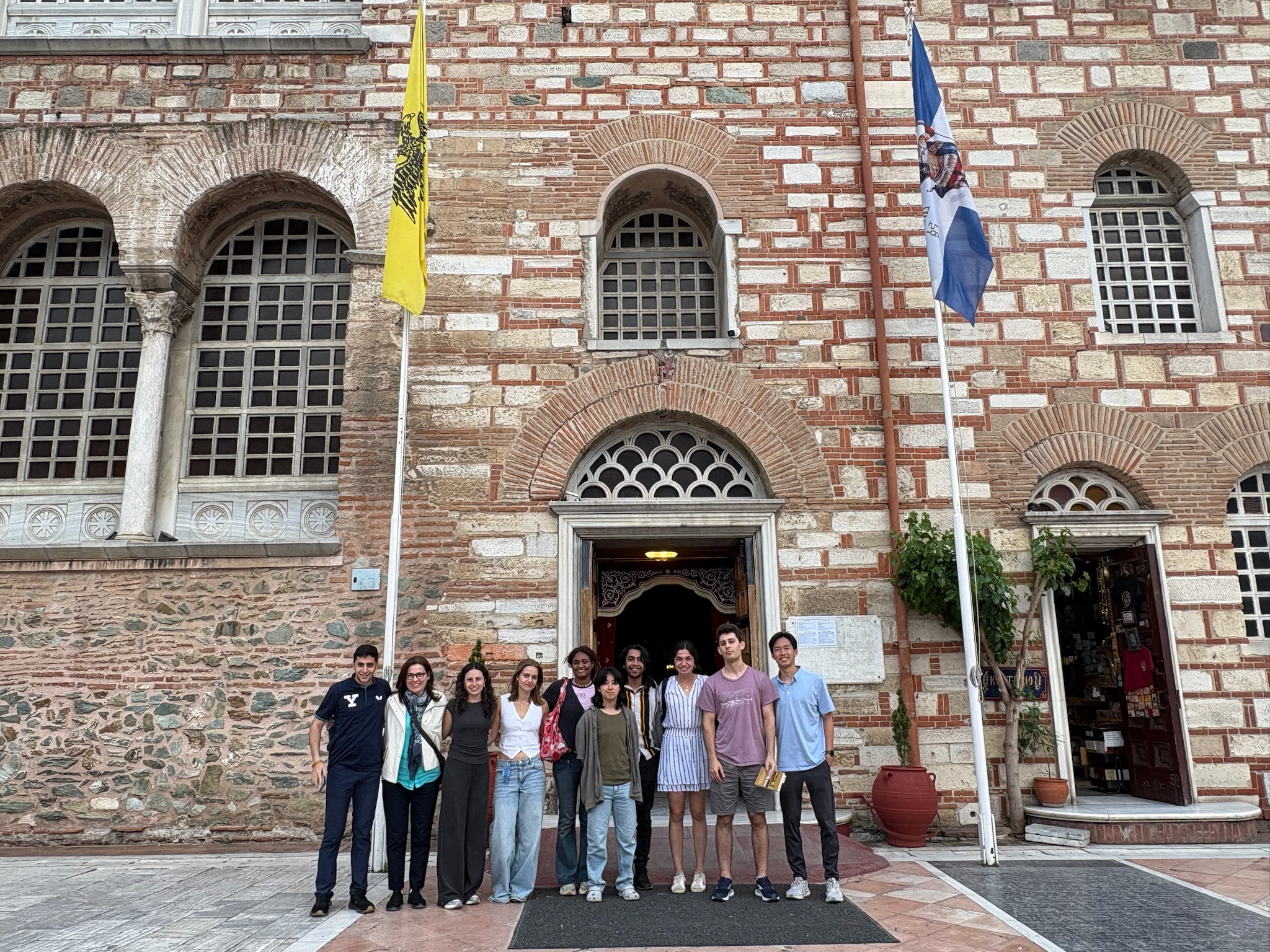
Luckily for me, I had the privilege of actualizing this dream. When my finals season concluded in early May, nine other students and I from Yale University’s Hellenic Studies Program traveled to Greece with our professor, Maria Kaliambou, where we participated in a summer language intensive at the School of Modern Greek Language at Aristotle University of Thessaloniki (AUTh). We were able to attend this program through the generosity of the Stavros Niarchos Foundation Center for Hellenic Studies and the Greek Ministry of Foreign Affairs.
I’ve been fortunate enough to visit Greece in the past with my family, but this was my first time in the country since taking language classes at the university. Before, when I traveled to Greece, I could mostly understand the language when it was spoken to me, parsing out familiar phrases and giving one- or two-word replies, but I barely had the skills to muster up any full-fledged conversations. However, after two years of daily lessons, I felt properly equipped with all the vocabulary and grammar to guide me through my journey.
Our class spent two weeks in Thessaloniki, attending daily classroom lessons supplemented by lectures, museum visits, and cultural tours. While the primary purpose of the trip was language study — with four hour lessons per day — we gained so much more than novel vocabulary and a firmer understanding of grammatical rules. It was a full cultural immersion and opportunity for personal growth. We visited various museums, such as the Museum of Byzantine Civilization, the Jewish Museum, and the Museum of the Royal Tombs of Aigai, and also toured many of the iconic landmarks, like the historic neighborhood of Ano Poli, which is home to Eptapyrgio Castle and Hagios Demetrios. We of course indulged in the city’s culinary masterpieces, namely bougatsa, and nailed our go-to coffee orders (a freddo cappuccino metrio, for me, please!).
Despite getting to do a deep dive into the language and experience all that Thessaloniki has to offer — from history to culture to gastronomy — the most meaningful and impactful part for me was witnessing my classroom coming to life.
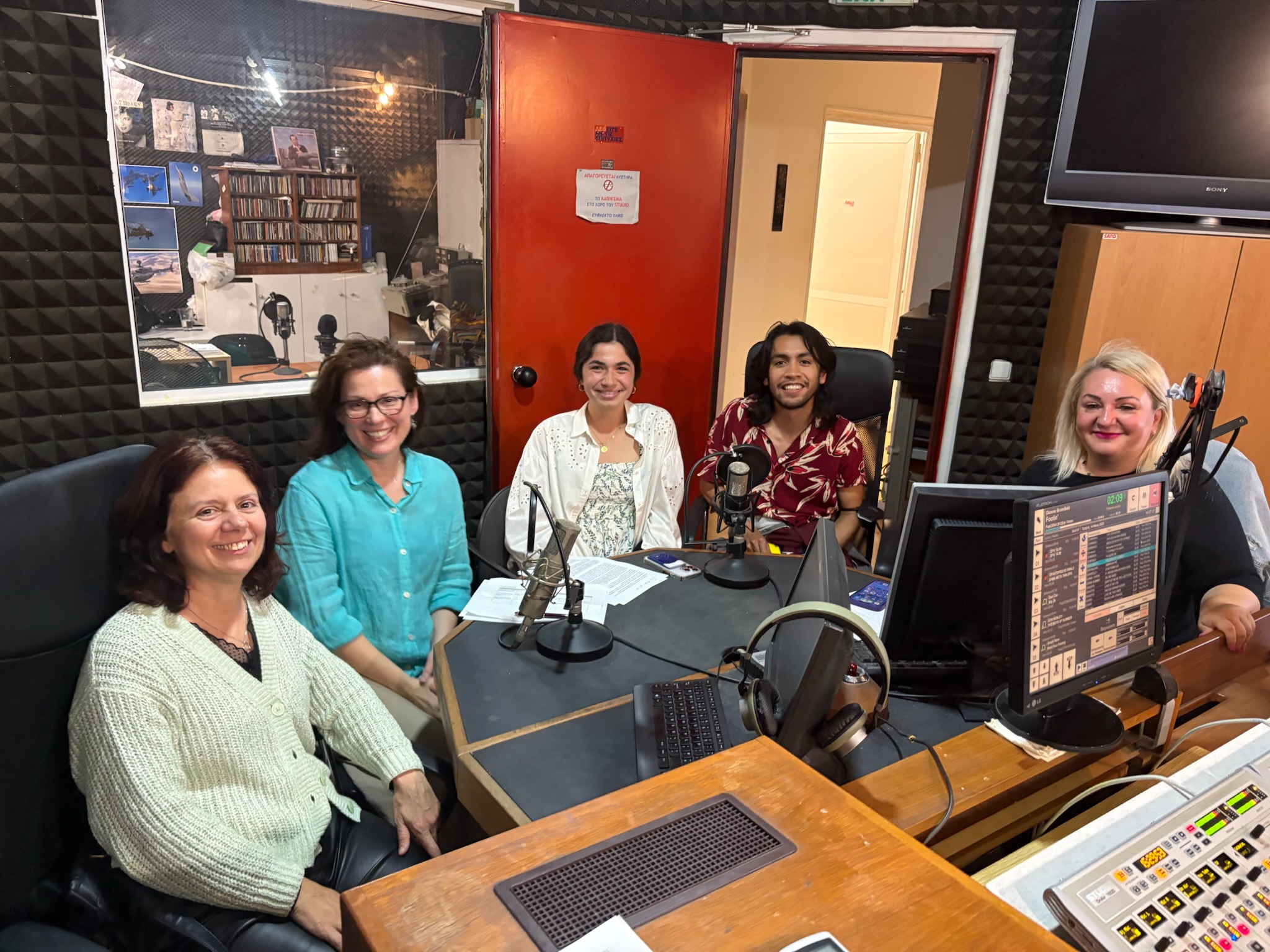
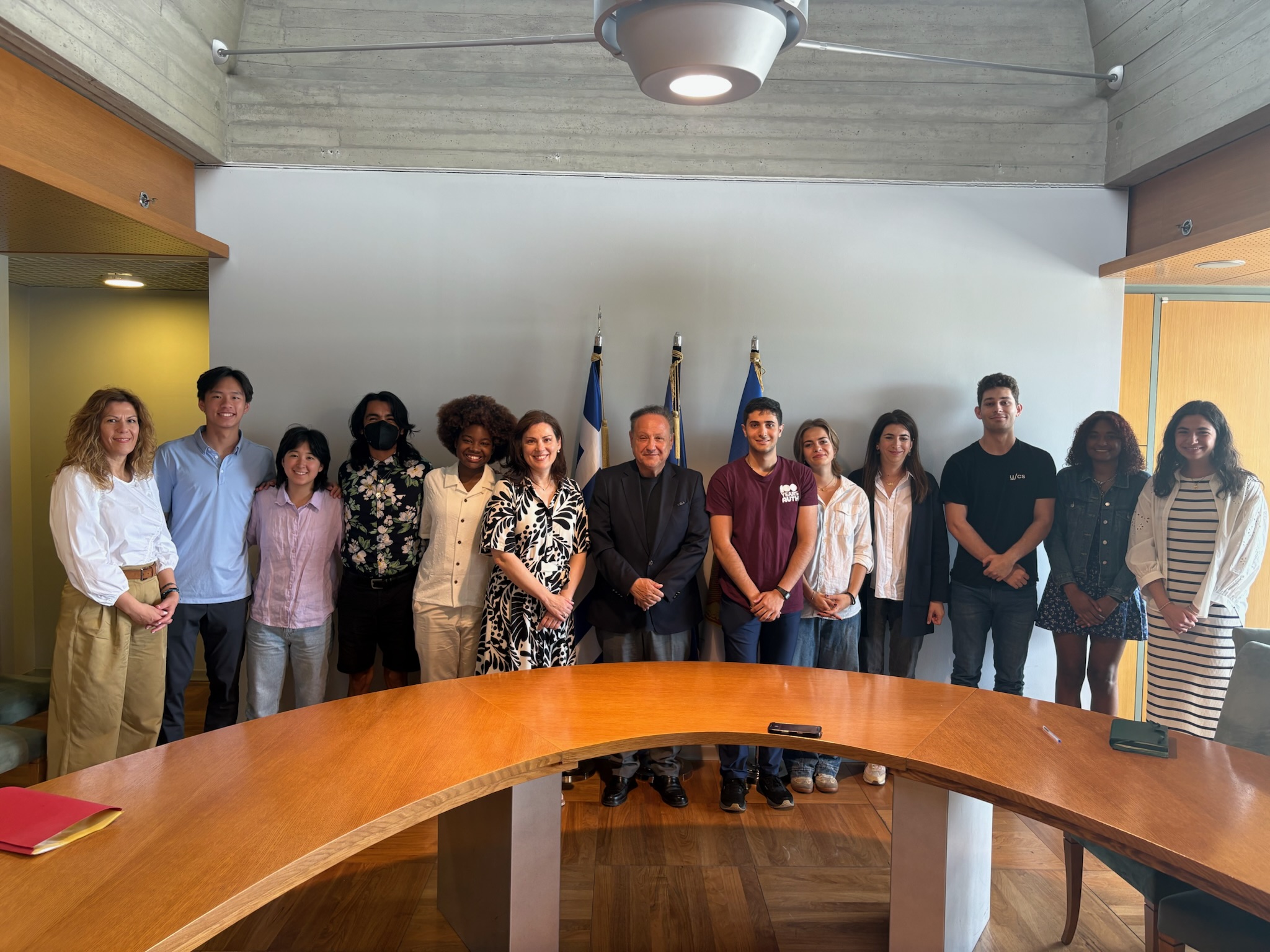
Throughout the two weeks, we had assignments and assessments that tested our knowledge, but the most remarkable part was getting to apply everything we’ve learned to a real-world setting. Whether that be practicing our speaking in taxi cabs or seeing all of the landmarks we learned about in class, this trip gave me a greater appreciation for the language and the city. We even had radio and television features as well as the opportunity to meet Thessaloniki’s mayor, Stelios Angeloudis.
A truly noteworthy experience for me was seeing — and living in — all of the destinations we had read about in our textbook and discussed in class. I’ll never forget this particular Greek quiz I took in my first semester at Yale, in which one of the questions was to name a monument or location in Thessaloniki. I could barely recall any of them, so I reluctantly wrote “Λεύκο Πύργο” on the quiz, not quite remembering if it was something we had learned or a figment of my imagination. But, two years later, to actually climb to the top of Λεύκο Πύργο and experience it as something more than just a picture in a textbook or a question on a quiz was surreal. Moreover, when we met with some of the AUTh students at Καμάρα, walked through Πλατεία Αριστοτέλους, and casually asked each other, “Πάμε για καφέ;” I felt like I was one of the characters from the passages in our textbook — truly living like a local.
It was in the moments like these that the bridge between me and my ancestors seemed almost palpable. I was learning their history, their culture, their language. While I have explored and experienced Greek culture and history during my previous trips to the country, the language component opened my world, allowing me to see the country in a new light.
I am so beyond grateful for this experience that not only enhanced my language learning but also — more importantly — brought me closer to my culture and heritage in ways that I never could have imagined.

 Please wait...