

By Terry Poulos, special to the Hellenic News of America
It truly is a wonderful Greek life when Uncle Giorgos Baileyos can lasso his Theia’s Moon…
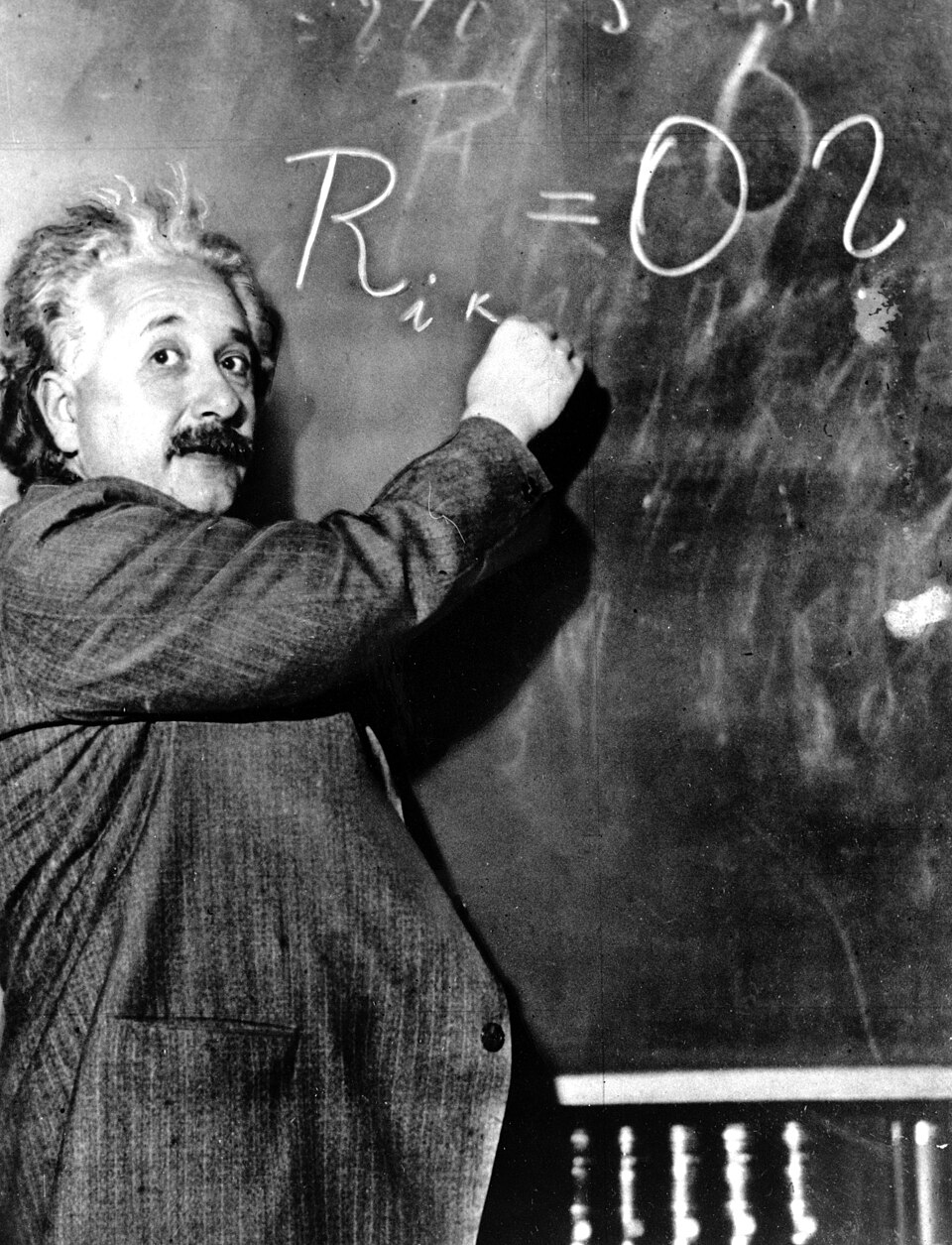
IMPROVING ON EINSTEIN: Ever since Albert Einstein introduced his seminal Special Theory of Relativity (SR) in 1905 – a high-velocity theory about the speed of light and observer reference frames – experimentalists have been trying (unsuccessfully) to test its time dilation effects (length contraction) on the quantum scale. SR is verified on the large classical and low-energy scale but not the small and high-energy scale. Theoretical physicist Vassilis Lembesis of King Saud University and colleagues have now devised a fiendishly clever experiment that could potentially provide a quantum proof. In its November 1 edition, New Scientist magazine detailed the group’s novel rotating “optical Ferris wheel” that also employs an electromagnetic field and lasers to manipulate particles in temperatures nearing absolute zero, which slows atoms to the point SR may become visible. Reaching back into history, Greek mathematician Constantin Caratheodory, who spent most of his career in Germany, is credited with helping Einstein formulate a subset of the equations for his General Theory of Relativity (GR), a geometric theory of gravity and space curvature published in 1915. Today, physicist Savas Dimopoulos has been at the forefront of improving the accuracy of GR’s predictions to 15 decimal places, and atom neutrality to thirty decimals of precision, according to his Stanford University biography.
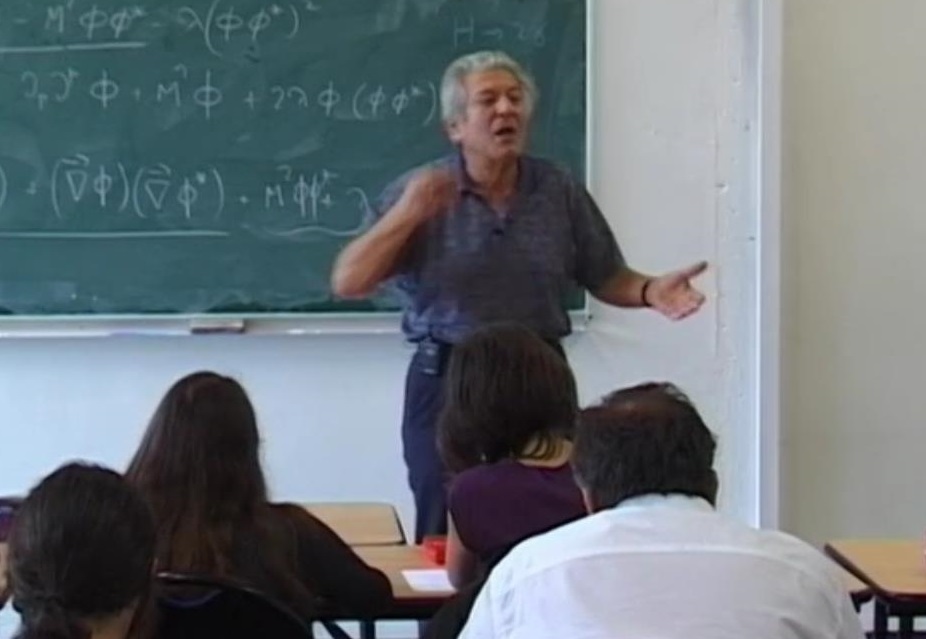
LEADING STRING THEORIST: The ancient Pythagoreans – who viewed all of nature as acoustic resonance – examined the harmonic ratios of the Lyre stringed instrument and ignited a two-millennium search for what makes the universe tick. Modern string theory is a proposed physics model that predicts tiny, synced-up vibrated threads that sculpt the matter we see and feel on the classical scale (E.g, planet, human). Theoretical physicist John Iliopoulos, honorary member of the Laboratory of Theoretical Physics of Ecole Normale Superieure in Paris, is one of the leading figures in the ongoing development of the string theory, the world’s most studied model for unifying Einstein’s General Relativity in a quantum gravitational framework. Iliopoulos is the first person to present the Standard Model of particle physics “in a single report,” according to his Wiki profile. One of his major predications that was later experimentally verified was that of the subatomic particle called the charm quark, which he conceived along with Nobel Prize winner Sheldon Glashow and their colleague Luciano Maiani (the so-called “GIM Mechanism”). When they name a method after you, you know you’ve made it. Well, Iliopoulos has two of these! He’s also co-innovator of the Fayet-Iliopoulos terms in string theory, which was once cited by Edward Whitten, widely-recognized as the top virtuoso mathematical physicist and string theorist in the world. String theory posits 10 total dimensions (degrees of configuration) – our familiar 3D triangulation of space (E.g, latitude, longitude, altitude), plus an additional seven or even 8 hidden dimensions that as of now remain too small or elusive to observe in particle collider experiments, or perhaps do not exist at all. The math, however, is beautiful and elegant, metrics which historically have been tremendous indicators of forthcoming physical proofs.
STUDIES MOMENT OF CREATIVE SPARK: Drexel University cognitive neuroscientist Evangelia Chrysikou, a native of Greece, and her work were profiled this August by Nautilus magazine. Dr. Chrysikou studies the science of creativity and how the brain combines existing knowledge into new concepts through the process of neural recombination. Her latest study involved imaging the brains of people determined to have exceptional creativity and comparing scans and chemical composition levels with a control group, and simultaneously accounting for similar ages and educational and professional backgrounds. “The key finding was that, for the eminent creators, there was a higher connectivity, both within each hemisphere, the right and left, but particularly across them—and especially in the two key networks that many studies have identified as important for creative thinking, the default mode network and the executive control network,” writes Nautilus. Personally, I’m partial to gyros as creative food for thought.
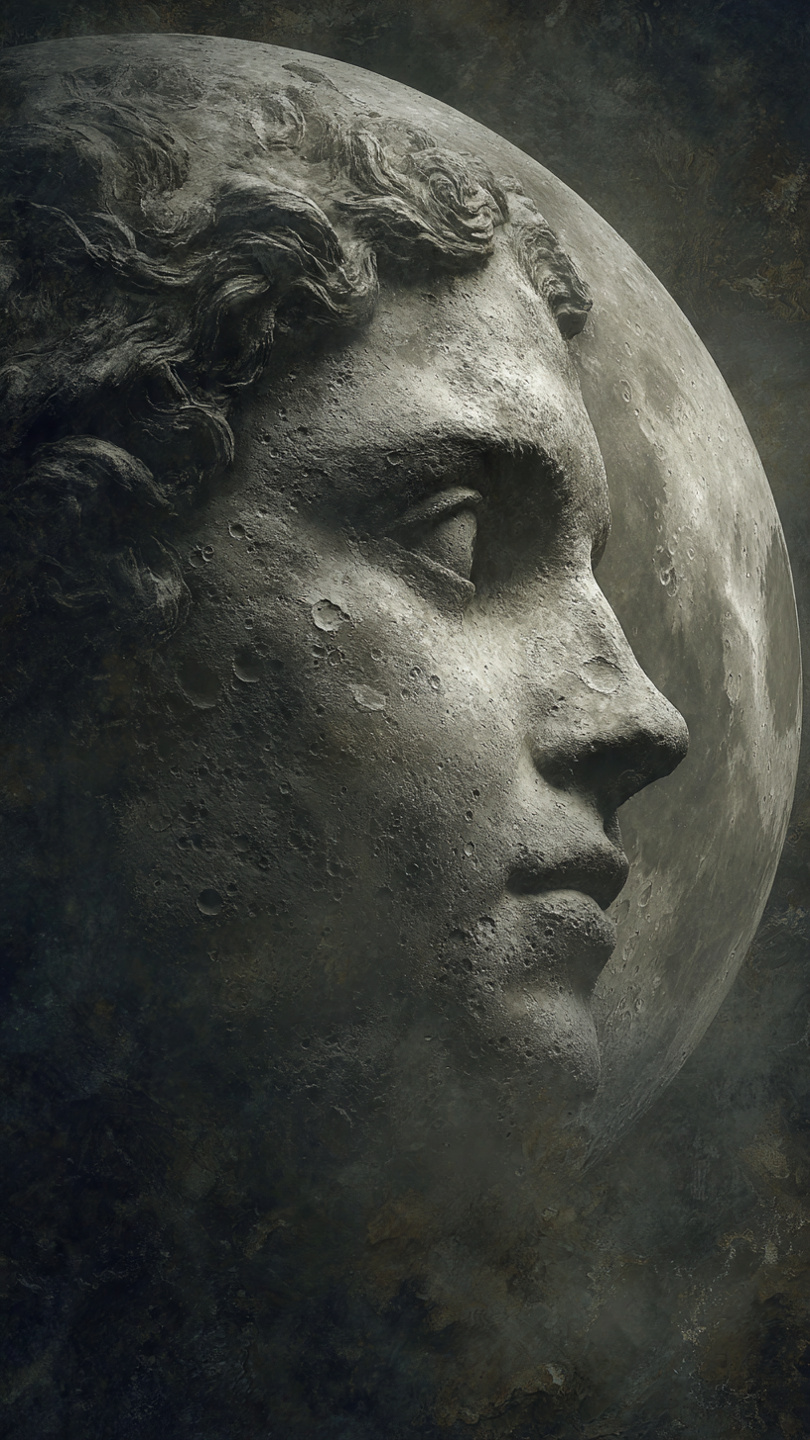
THEIA MADE THE MOON! When you gather with family this Christmas, be sure to give an extra hug and kiss to your Theia. As one of the Greek Titans who is also mother of Selene (goddess of the Moon), the mythical Theia inspired the name for an until-now hypothetical small planet that is Theia- zed to have collided with proto-Earth (the as-yet fully formed mass that eventually became our home planet). In November, an academic study was published which presents newfound evidence Theia did in fact exist and collided with early Earth. The enormous impact scattered debris which eventually accreted into Earth’s satellite companion. Researchers analyzed iron isotopes from lunar, Earth, and meteorite samples and “concluded that Theia formed in the early solar system, nearby Earth but possibly slightly closer to the Sun,” according to a Science journal editor summary. That’s one hot Theia! Evidently, her iron core is also what seeded Earth’s own iron core, which gave rise to the electromagnetic field that shields Earth from cosmic and solar radiation that would have otherwise killed life before it had a chance to evolve beyond single-celled organisms. We may owe our very lives to Theia! The lunar samples were taken during the Apollo moon missions (thanks Apollo!). One of the lead researchers of the study is French cosmochemist (yes, there is such a thing in the modern hyper-specialized scientific community) Nicholas Dauphas, whose name sounds a bit Greek. He did his post-doc at the University of Chicago before joining the faculty in 2024. As of this writing, we have yet to confirm if he has Greek origins but his embrace of Theia and decade-long attempt to prove the hypothesis – often in the face of intense pushback by established scientific dogma – earns him an `Honorary Hellene’ title in our book.
Terry Poulos is a writer, artist, and fractal geometer whose inquisitions focus on theoretical physics, mathematics, ancient and modern technology and archaeology. His art and musings can be found at Scientiquity.com and Scient

 Please wait...