


By Terry Poulos, special to the Hellenic News of America
From Democritus to Plato, Archimedes and beyond, Greeks have been at the forefront of paradigm-shifting breakthroughs in the natural sciences throughout history. It’s stunning and uncanny the outsized per-capita impact our peoples have effected. To honor that legacy – which continues today – we begin a new editorial odyssey to chronicle those `making great happen.’ Whether it be physics, chemistry, biology, mathematics, and/or artificial intelligence and computer sciences, we’ll cover the gamut. Hope you enjoy!
GREEK-MAKING: As are all ethnicities, we Greeks are a proud bunch but sometimes get a little carried away, me no exception. On October 7, the Nobel Prize committee announced three winners of the 2025 physics prize. One of the recipients is John Martinis, a University of California-Santa Barbara professor. The GPMA (Greek Person Manufacturing Association) went into full rotisserie spin mode with news that one of ours had been awarded the prestigious honor. Then the man confirmed he’s actually ethnic Croatian. One Greek publication reached him by phone, whereby Martinis explained he’s not Greek but perhaps somewhere in his lineage there exists a link. He asked if the interviewer wished to proceed, which may actually have been a great opportunity. He did not shy away from the association, meaning he has at least some bit of affinity for Hellenes. All science undergrads begin with a history of ancient Greek science, requisite to bottom-up learning. It’s also near impossible to pick up a popular physics book without encountering a treatise on classical Greek science from the first chapter onward. Science and maths in this way naturally imbue a sense of awe about the ancients for all who “dare enter” (an ode to the Pythagorean academy). Dr. Martinis, we’d still love to talk!
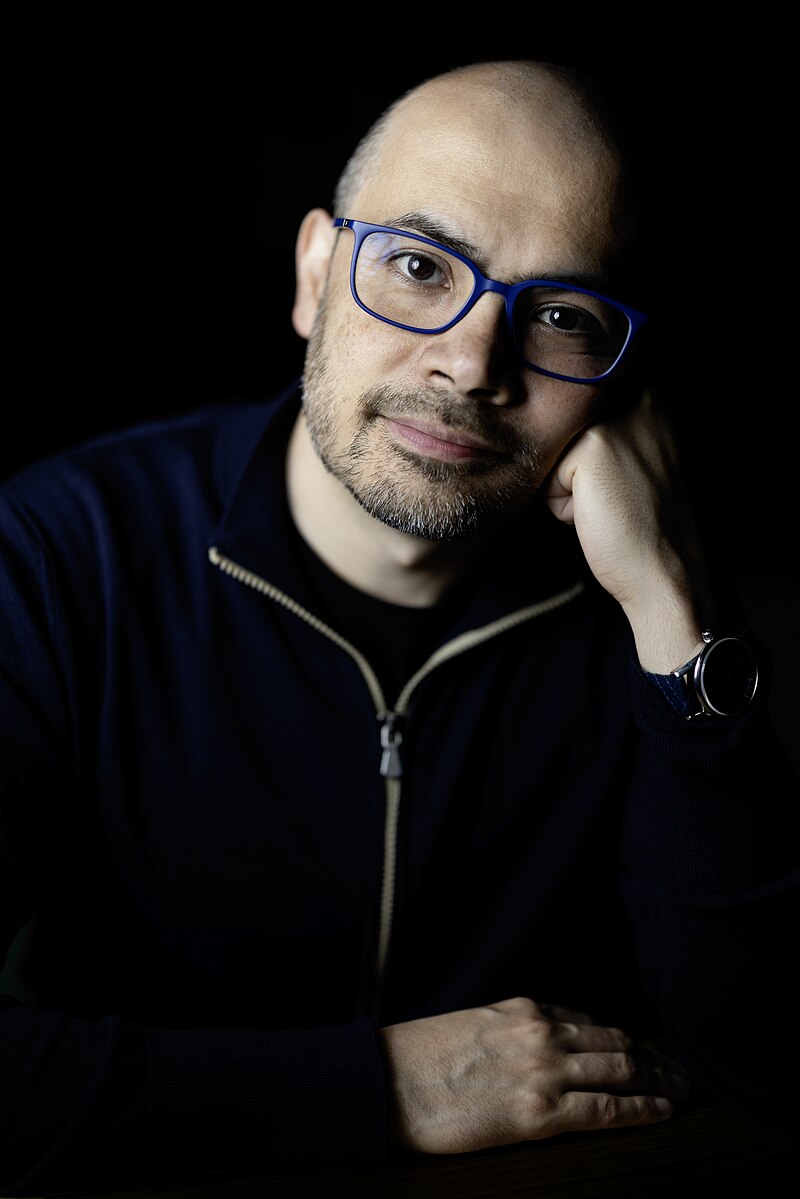
NOBEL TO GOOGLE CEO? Not to despair, fellow Hellenes. In 2024, we did corral a Nobel. Google’s head of artificial intelligence, Demis Hassabis, shared the prize in chemistry. His father is a Greek Cypriot and his mother is ethnic Chinese. While Hassabis is not a chemist by training, he was the person most central to crafting the algorithms that led to Google’s AI running the simulations that led to the desired solutions. It was the first Nobel in chemistry ever awarded to a non-chemist. Strong word is, Hassabis – said to be the #3 executive at Google – is a leading if not the leading candidate to become Google CEO when the time arrives for transition. AI is overwhelmingly the top priority for all tech companies and as such it makes sense Hassabis would be atop the list for arguably the most coveted job in technology today. Mr. Hassabis, we’re at your disposal any time, any space! As an aside, for nearly 9 years in the 2010’s, marketing guru and prominent Philhellene Margo Georgiadis, married to tech investor and Synetro Group founder Pantelis Georgiadis, served as Google’s President of the Americas.
PLATO NEARS LAUNCH: Space agencies have a proclivity toward naming spacecraft and missions after historical Greek figures such as Apollo, Gemini, and Artemis, to name three prominent NASA missions. In late September, the European Space Agency (ESA) completed key fitness tests on the unmanned Plato launch vehicle, tasked with searching for Earth-like exoplanets. On schedule for a December 2026 launch, Plato’s assembly team includes France-based firm Thales Alenia Space. In other news, the ESA is now in the early stages of planning for the NewAthena Telescope (2037 anticipated launch). NewAthena is an abridged acronym for ‘New Advanced Telescope for High-ENergy Astrophysics’. Incidentally, private space company Space X is now working on its Artemis 3 mission. Lastly, a new astronomical phenomenon was recently named for Stefanos Aretakis, an associate professor at the University of Toronto. It’s called the “Aretakis constant” and has to do with spherically symmetric extremal black hole spacetimes. It’s quite an honor to have a constant named after you. These things are rare in science and mathematics.
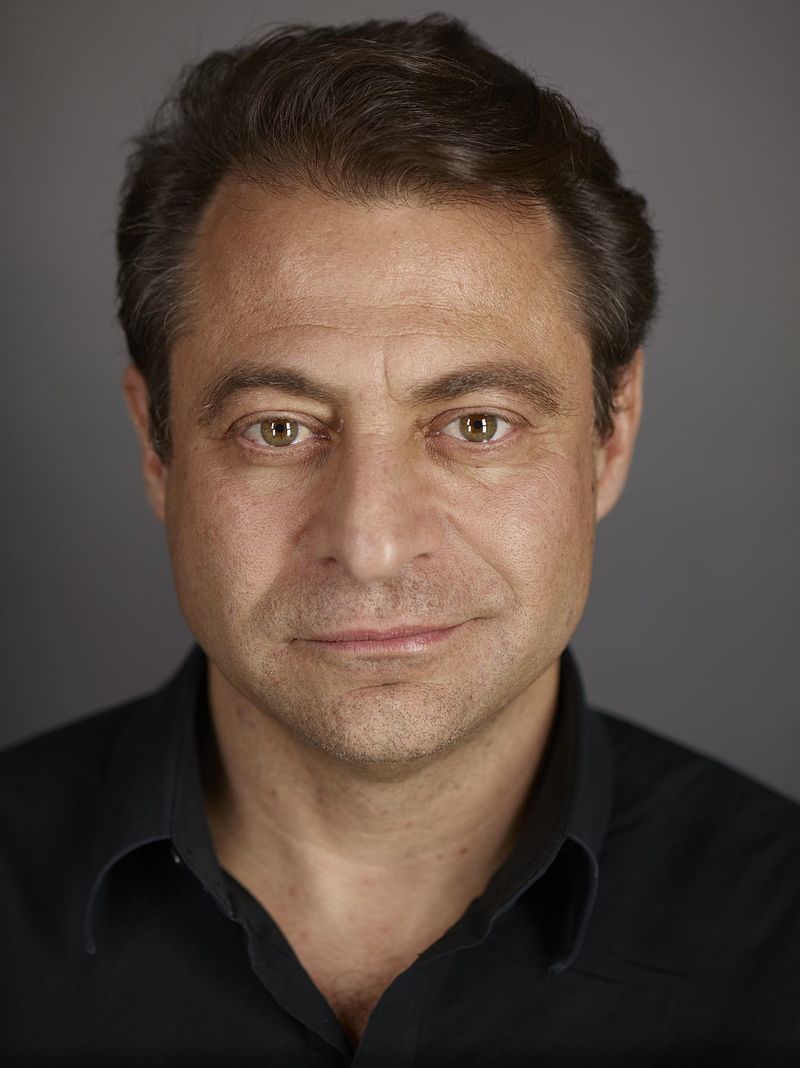
X PRIZE FOUNDER: A starry-eyed Dr. Peter H. Diamantis, a Harvard-educated MD who also studied aeronautics and astronautics at MIT, from an early age was inspired by the Apollo moon missions so much so that he went on to found the Ansari X Prize, a $10 million winner-take-all competition for the team to be first to reach suborbital zero gravity in a privately-built spacecraft. That 2004 event made global headlines and served as the genesis for the now thriving private space industry. SpaceShipOne, financed by the now late Microsoft co-founder Paul Allen, was the inaugural winner. The craft now hangs from the ceiling at the National Air and Space Museum, part of the Smithsonian Institution in Washington, DC – a testament to one Greek American’s skillful stewardship and dogged determination in pushing humanity to ever-greater heights of scientific innovation and technical efficiencies. A visionary futurist, Dr. Diamandis, based in Culver City, CA, is a past Paradigm Award recipient from the PanHellenic Scholarship Foundation. He has since helped X Prize expand to 30 categories encompassing competitions in energy and the environment, global development, and life sciences. Dr. Diamandis’ most recent undertaking is a collaboration with famous motivational speaker Tony Robbins on life extension.
KRYPTOS DECODED: The 35-year enigma of the CIA’s Kryptos sculpture-slash-puzzle has finally been solved. Kryptos features a labyrinthine alpha code that escaped would-be cryptographers since its installation at the agency’s Langley, VA headquarters. In early October, two researchers located the final pieces after an exhaustive review of records at the National Archives. We Greeks love to tackle so-called `impossible’ puzzles. Tell us something can’t be done and we’re on it! It’s like throwing down the gauntlet. While a Greek did not solve the Kryptos puzzle, we note that one of the 20 CIA directors throughout history is Greek American George Tenet. Twenty is not a large sample but 1/20 is no insignificant ratio considering there are only an estimated 1.2 to 3 million Greeks in the USA. National intelligence clearly is one of those never-ceasing enigmas wrapped in riddles surrounded by puzzles that are like those aforementioned impossible puzzles.
Terry Poulos is a writer, artist, and fractal geometer whose inquisitions focus on theoretical physics, mathematics, ancient and modern technology and archaeology. His art and musings can be found at Scientiquity.com and Scient

 Please wait...